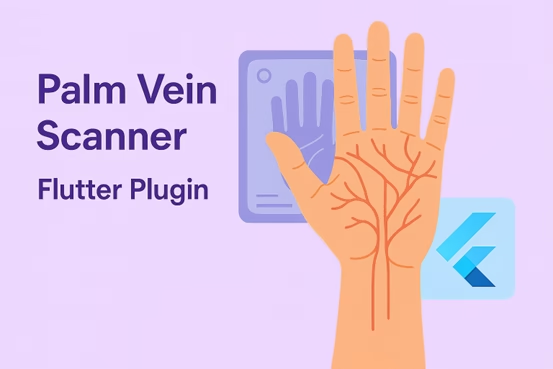
Which Palm Vein Scanner SDKs Support Flutter Development?
Flutter has become one of the most widely used frameworks for developers who want to build fast, consistent, and scalable cross-platform applications.
For teams working on biometric identification y Pago de la vena de la palma solutions, finding a Palm Vein Scanner SDK that supports Flutter is essential for faster integration and smoother deployment.
Below is an overview of several vendors providing palm or palm vein recognition SDKs, and their current level of Flutter support (or feasibility):
| Vendor / SDK | Flutter Support | Notes / Limitations |
|---|---|---|
| KBY-AI Palm Recognition SDK | ✅ Sí | Official documentation clearly states support for “Flutter plugin (for Android, iOS)”. However, it only supports RGB-based AI palm recognition and lacks IR capability, therefore not recommended for large-scale projects such as Palm Pay o Palm e-KYC. |
| BioWavePass (X-Telcom) | ✅ Sí | Fully supports Flutter with a complete Flutter Plugin SDK and integration manual, enabling direct use without additional bridging work. Supports RGB + IR dual-modal Palm Vein Scanner data capture, ensuring higher accuracy and security for Palm Pay y Palm e-KYC aplicaciones. |
| Fujitsu PalmSecure SDK | ❌ Not Officially Supported | The SDK is designed for hardware and sensor integration, but no mention of native Flutter support in official materials. |
| Redrock Biometrics (PalmID) | ⚠️ Unclear | Offers Android and Windows SDKs, but no explicit documentation about Flutter plugin availability. |
| Faceplugin Palm Recognition SDK | ⚠️ Unclear | Promotes itself as a “Palm Recognition SDK,” yet public information doesn’t confirm Flutter plugin support — likely requires manual integration. |
🚀 Why Developers Choose BioWavePass Palm Vein Technology SDK
As part of X-Telcom’s Palm Vein Technology Solutions, the SDK de tecnología BioWavePass Palm Vein is designed for developers who need a reliable, high-accuracy Palm Vein Scanner SDK that works seamlessly with Flutter environments.
Key Advantages:
- ⚙️ Native Flutter SDK — optimized for Android and embedded systems.
- 💡 Faster development cycle — Flutter’s hot reload accelerates integration and testing.
- 🔒 High accuracy & security — 99% recognition rate and 0.35-second matching speed powered by RGB + IR dual-spectrum algorithms.
- 🧩 Ideal for multiple sectors — supports Pago de la vena de la palma, eKYC, healthcare, and enterprise access systems.
Con BioWavePass, developers no longer need to build bridging layers — the SDK is ready for immediate integration and real-world deployment.
🌍 Simplifying Palm Vein Scanner Integration
En BioWavePass, our mission is to make biometric technology accessible, secure, and developer-friendly.
En SDK de tecnología BioWavePass Palm Vein enables integration of Palm Vein Scanners directly into Flutter-based fintech and identity applications — bringing biometric payments closer to everyday use.
👉 For Palm Vein Scanner Flutter SDK details, please contact us
Comparte este artículo
Sobre el autor

También le puede interesar
Bringing Palm Vein Scanning into a Web Workflow
From Palm Payment MVP to Commercial Deployment: Building a Scalable Biometric Payment System
How to Integrate a USB Palm Vein Scanner with a POS Terminal
Palm Payment Goes Live in Azerbaijan: From Biometric Technology to Real-World Payment
From MVP to Market: Scaling Palm Vein Technology with BioWavePass
Palm Vein Payment: How Biometric Payments Work Without Cards or Phones
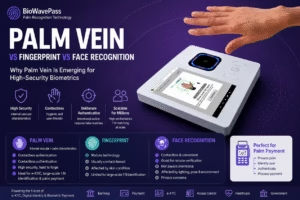
Palm Vein vs Fingerprint vs Face Recognition: Why Palm Vein Is Emerging for High-Security Biometrics
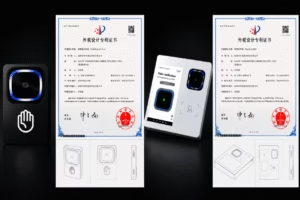
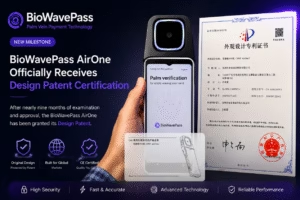
BioWavePass Palm Vein Scanner Products Receive Design Patent Certification
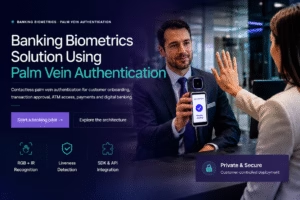
Palm Vein Authentication: The Future of Secure Digital Identity and Payments