What Is Palm Vein Payment and How Does It Connect with Digital Wallets?
Technology language can sometimes sound complicated, especially when we talk about biometrics, tokenization, SDKs, payment processors, and wallet systems.
But from a non-technical point of view, maybe palm vein payment can be understood in a very simple way:
The palm does not become the bank card.
The palm helps the system confirm the person.
Hope this explanation is helpful to everyone who is interested in Palm Vein Payment Solutions. 💜 🩵
Palm Vein Payment Is an Identity Bridge, Not a New Wallet
In many digital wallet payments today, the user normally presents a phone, smart watch, or card to the POS. The POS receives payment-related information, and the wallet platform continues the transaction.
Palm vein payment follows a different logic.
The palm vein device does not need to read card details from the user’s palm. It also does not need to turn the palm into a wallet.
Instead, the palm becomes a trusted way to confirm identity.
After the user is recognized, the customer’s wallet, bank, or fintech platform decides what should happen next.
In simple words:
BioWavePass answers: who is this user?
The payment platform answers: which account should be used?
This is the key difference.
A More Practical Way to Understand It
Maybe we can compare the logic like this:
Traditional Wallet Payment
The phone or wallet device presents a payment token to the POS.
Palm Vein Payment
The palm identifies the user first.
Then the platform finds the linked wallet account, customer account, or payment token.
So palm vein payment is not trying to remove the digital wallet platform. It works together with it.
The wallet platform still manages the account.
The bank or fintech platform still manages payment authorization.
The processor still completes the transaction.
The palm vein system adds a biometric identity layer before payment starts.
This is why palm vein payment is more like a connection between human identity and digital payment accounts.
How the Registration Process Usually Works
Before a user can pay by palm, they need to register first.
During registration, the approved system captures the user’s palm information and creates the biometric identity record.
For BioWavePass, this process may include:
- Palm image capture
- RGB + IR feature extraction
- Image quality checking
- Registration quality control
- User account binding
At the same time, the customer’s own platform links this biometric identity with the user’s wallet account, customer ID, membership account, bank account, or payment token reference.
This linking step is very important.
The biometric system should know who the person is.
The payment platform should know what account belongs to this person.
Both systems need to work together, but they do not need to do the same job.
What Happens During a Palm Payment?
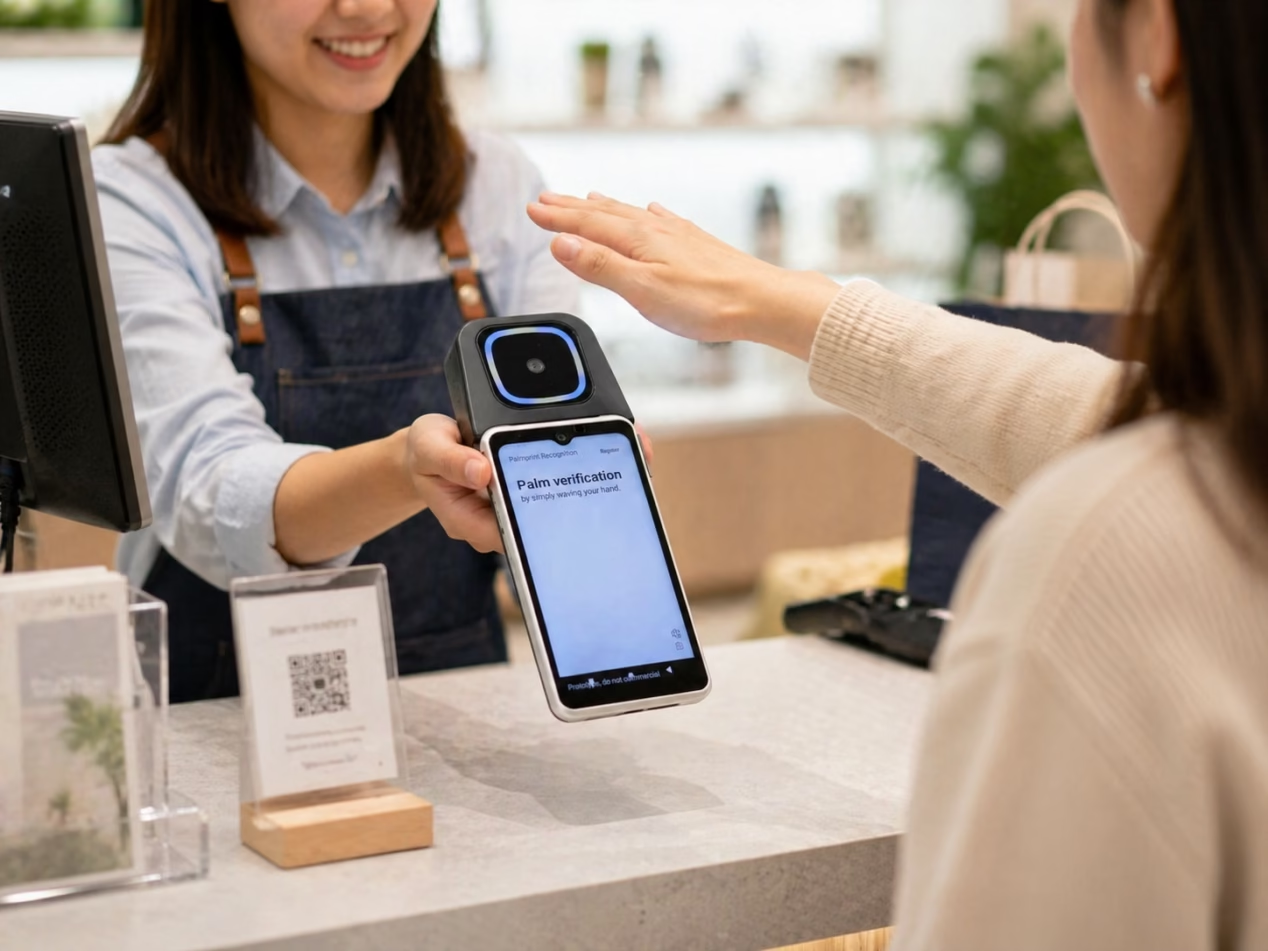
When the user wants to pay, the action is very simple.
They present their palm above the palm vein terminal or POS-based palm payment device.
The device captures palm features and sends a verification request to the biometric matching server.
If the palm is matched successfully, the system returns the related user identity reference, such as a user ID, wallet ID, customer ID, or token reference.
Then the customer’s payment platform continues the transaction according to its own payment rules.
For the user, the process feels very natural:
No phone.
No card.
No password.
No need to search for anything in a bag or pocket.
Just present the palm and complete the payment.
Why the POS Should Not Store Card Data
One thing we always need to make clear is this:
The POS device should not become a storage place for card information.
In a safer architecture, the palm vein terminal only handles palm capture, biometric verification communication, and identity confirmation.
Sensitive payment data should stay inside the customer’s own payment environment, such as:
- Wallet platform
- Bank system
- Payment processor
- Tokenization platform
- Customer account system
This separation makes the system cleaner and safer.
The device does not need to know the full card number.
The device does not need to store wallet balance.
The device does not need to manage payment authorization.
It only needs to support reliable identity verification.
What BioWavePass Provides
BioWavePass focuses on the biometric side of the solution.
We provide the palm vein hardware, SDK, biometric algorithm, and technical integration support needed for customers to build their own palm vein payment experience.
Our support can include:
- Palm vein recognition devices
- RGB + IR palm image and feature capture
- SDK documents and development support
- Biometric matching algorithm
- Server-side matching support
- Integration guidance for fintech, banking, wallet, and retail systems
- Hardware options for POS, fixed terminal, kiosk, ATM, or customized payment environments
The customer’s own platform normally manages the commercial payment side, including wallet linking, card tokenization, account management, payment authorization, risk control, and transaction settlement.
This boundary matters.
BioWavePass does not replace the wallet platform.
BioWavePass helps the wallet platform identify the user more conveniently.
What About Biometric Data Security?
Palm vein payment involves biometric data, so data ownership and system architecture must be considered seriously.
For BioWavePass, all palm vein data and photos are encrypted with AES-256 and stored only on the customer’s own system.
BioWavePass / X-Telcom does not participate in customer data management.
The customer owns the system.
The customer controls the data.
The customer manages compliance according to its local regulation and internal policies.
This is also important for GDPR alignment, because biometric identity data should stay under the control of the customer’s approved system, not inside a third-party vendor database.
In simple words:
We provide the biometric technology.
The customer keeps control of the biometric and payment data.
Why This Model Is Easier for Banks and Fintech Platforms
For banks, fintech companies, wallet providers, and payment platforms, replacing an entire payment system is usually not realistic.
They already have their own systems for:
- User accounts
- Wallet balance
- Card tokenization
- Payment authorization
- Transaction records
- Risk control
- Compliance management
- Settlement logic
Palm vein payment should not disturb these core systems.
A more practical model is to add palm vein recognition as an identity layer on top of the existing payment ecosystem.
This allows the customer to keep its current payment infrastructure while offering users a new and more convenient way to authenticate.
That is why we see palm vein payment as an upgrade to the user experience, not a replacement of the customer’s payment platform.
Where Palm Vein Payment Can Be Used
Palm vein payment can be useful in many real payment environments, especially where speed, convenience, and identity confidence are important.
Common scenarios may include:
- Retail checkout
- Supermarkets and smart stores
- Campus payment
- Canteen payment
- Transportation payment
- Banking self-service terminals
- ATM or kiosk identity verification
- e-KYC and account binding
- Membership payment
- Loyalty programs
- Financial inclusion projects
Different projects may need different BioWavePass hardware options.
For example, a fintech company may prefer a POS-based palm payment terminal.
A bank may need a USB palm vein module for ATM or kiosk integration.
A retailer may choose a fixed palm vein terminal connected to its own cashier or membership system.
The hardware form may be different, but the basic logic is the same:
Recognize the person first.
Connect to the right account.
Let the payment platform complete the transaction.
Final Thoughts
From our understanding, palm vein payment is not simply a new payment method. It is a biometric identity layer that connects real people with digital wallet accounts.
The palm does not replace the bank card.
The palm does not replace the wallet platform.
The palm does not replace the payment processor.
The palm helps the system recognize the user in a faster, safer, and more natural way.
For BioWavePass, our goal is to support banks, fintech companies, wallet providers, and retail payment platforms with palm vein hardware, SDK, biometric algorithm, and integration documents, so they can build their own palm vein payment solution based on their existing ecosystem.
Palm vein payment is not about changing everything.
It is about making the identity step easier, more secure, and more human.
Learn more from: https://choosepalmveinpay.com/
Share this article
About the Author

You might also like
Bringing Palm Vein Scanning into a Web Workflow
From Palm Payment MVP to Commercial Deployment: Building a Scalable Biometric Payment System
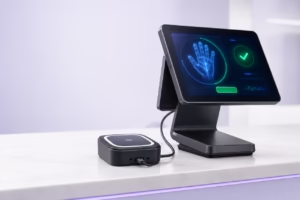
How to Integrate a USB Palm Vein Scanner with a POS Terminal
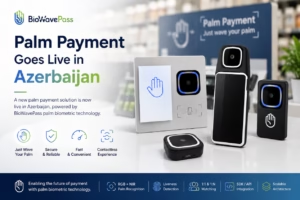
Palm Payment Goes Live in Azerbaijan: From Biometric Technology to Real-World Payment
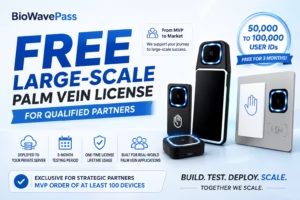
From MVP to Market: Scaling Palm Vein Technology with BioWavePass
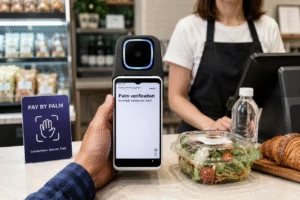
Palm Vein Payment: How Biometric Payments Work Without Cards or Phones
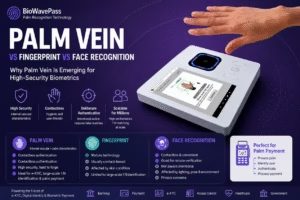
Palm Vein vs Fingerprint vs Face Recognition: Why Palm Vein Is Emerging for High-Security Biometrics
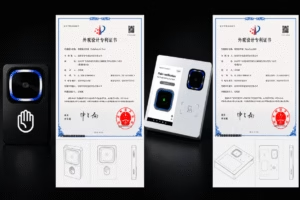
BioWavePass Palm Vein Scanner Products Receive Design Patent Certification
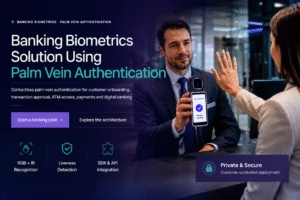
Palm Vein Authentication: The Future of Secure Digital Identity and Payments