Small Model vs Large Model: How to Scale Palm Vein Systems Efficiently
Introduction
Palm vein recognition is rapidly becoming a key technology for secure identity verification, palm payment, eKYC, access control, and large-scale public systems.
One critical question for any project is:
How can a palm vein system start small and scale efficiently as the user base grows?
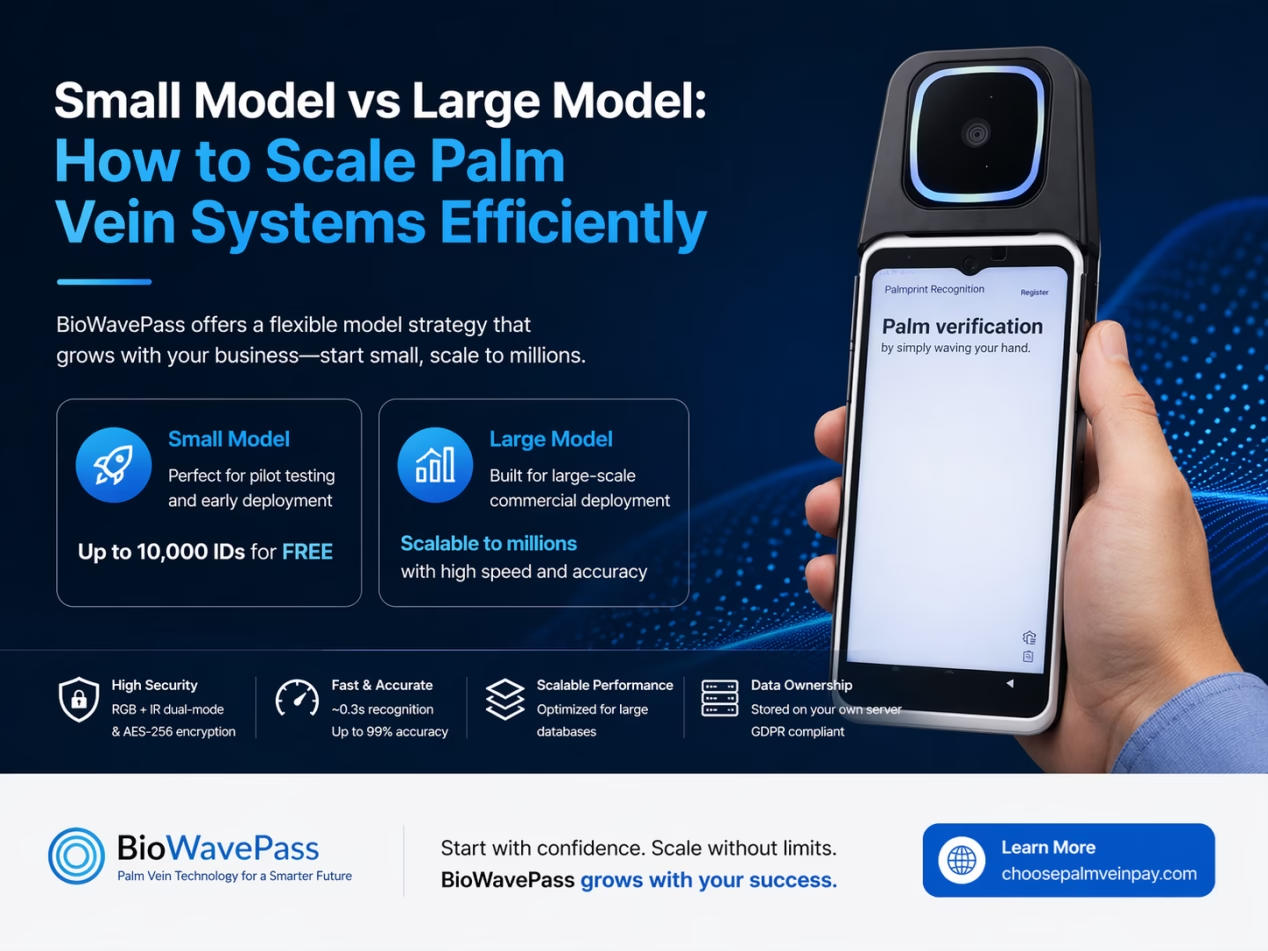
BioWavePass addresses this with a flexible approach: Small Model for early-stage deployment and Large Model for large-scale commercial systems.
What Is the BioWavePass Small Model?
The Small Model is designed for MVP testing and early deployment.
It supports up to 10,000 user IDs for free, allowing customers to:
- Test system workflows
- Validate SDK/API integration
- Build pilot projects
- Launch early-stage services
This model reduces both initial cost and deployment risk, making it ideal for developers and system integrators starting new projects.
When Do You Need to Scale?
As your system grows, so do the requirements for:
- Faster identification speed
- Higher accuracy in large databases
- Stable system performance
For applications like:
- Banking and fintech platforms
- Government subsidy systems
- Healthcare identity systems
- Transportation and ticketing
A more powerful solution becomes necessary.
What Is the BioWavePass Large Model?
The Large Model is designed for large-scale deployments.
Once the number of users exceeds 10,000, customers can upgrade to the Large Model by purchasing an algorithm package.
Key advantages include:
- Support for large-scale databases (hundreds of thousands to millions of users)
- Faster matching performance
- Higher stability at scale
- Suitable for long-term commercial use
After upgrading, there is no practical limitation on user quantity, depending on system architecture and licensing.
Seamless Upgrade from Small to Large Model
One of the biggest advantages of BioWavePass is the smooth upgrade path.
Customers can:
- Start with the Small Model
- Upgrade to the Large Model without rebuilding the system
The transition mainly involves:
- Server-side deployment updates
- Interface configuration adjustments
To ensure a smooth upgrade, it is strongly recommended to:
- Store RGB + IR images and feature data during registration
This allows existing users to migrate without re-enrollment.
Why Scalability Matters
Palm vein systems must maintain performance as user numbers grow.
BioWavePass achieves this through:
- RGB + IR dual-mode capture
- Multi-feature matching
- Server-side comparison architecture
- Optimized large-scale database performance
This ensures consistent speed and accuracy from thousands to millions of users.
Data Ownership and Security
All palm vein data and images are encrypted with AES-256 and stored on the customer’s own server.
The customer maintains full ownership and control of both the system and data, ensuring a compliant architecture aligned with GDPR requirements.
BioWavePass does not store, manage, or access customer biometric data. It provides only the device, algorithm, SDK, and integration support.
Small Model vs Large Model Comparison
| Item | Small Model | Large Model |
|---|---|---|
| Best For | MVP / Pilot Projects | Commercial Deployment |
| User Capacity | Up to 10,000 IDs | Scalable to millions |
| Cost | Free | Paid |
| Accuracy at Scale | Limited | Optimized |
| Deployment Stage | Testing & Validation | Production |
| Upgrade | Available | Final stage |
Which Model Should You Choose?
Choose the Small Model if you are:
- Testing palm vein technology
- Building a pilot project
- Working with a small user base
Choose the Large Model if you are:
- Scaling to large user volumes
- Deploying banking or payment systems
- Running national or enterprise-level platforms
BioWavePass Scalable Ecosystem
BioWavePass provides a complete hardware and software ecosystem:
- AirOne → Mobile palm payment terminal
- WavePass500 → Fixed palm recognition terminal
- PalmVein01 → USB integration module
- PalmVein01 Pro → Self-powered USB scanner
Combined with flexible algorithm models, this enables end-to-end scalable deployment.
Conclusion
Scaling a palm vein system requires the right combination of algorithm, architecture, and deployment strategy.
With BioWavePass:
- You can start with zero-cost testing (Small Model)
- Seamlessly upgrade to large-scale deployment (Large Model)
- Maintain high performance across all stages
This makes palm vein technology practical, scalable, and ready for real-world applications.
Learn More
Explore BioWavePass palm vein solutions:
https://choosepalmveinpay.com/
Share this article
About the Author

You might also like
Bringing Palm Vein Scanning into a Web Workflow
From Palm Payment MVP to Commercial Deployment: Building a Scalable Biometric Payment System
How to Integrate a USB Palm Vein Scanner with a POS Terminal
Palm Payment Goes Live in Azerbaijan: From Biometric Technology to Real-World Payment
From MVP to Market: Scaling Palm Vein Technology with BioWavePass
Palm Vein Payment: How Biometric Payments Work Without Cards or Phones
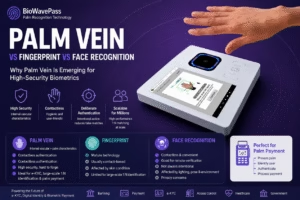
Palm Vein vs Fingerprint vs Face Recognition: Why Palm Vein Is Emerging for High-Security Biometrics
BioWavePass Palm Vein Scanner Products Receive Design Patent Certification

Palm Vein Authentication: The Future of Secure Digital Identity and Payments