Do Palm Vein Terminals Need PCI or EMV Certification in Biometric Payment Systems?
1. Do Palm Vein Terminals Need PCI or EMV Certification?
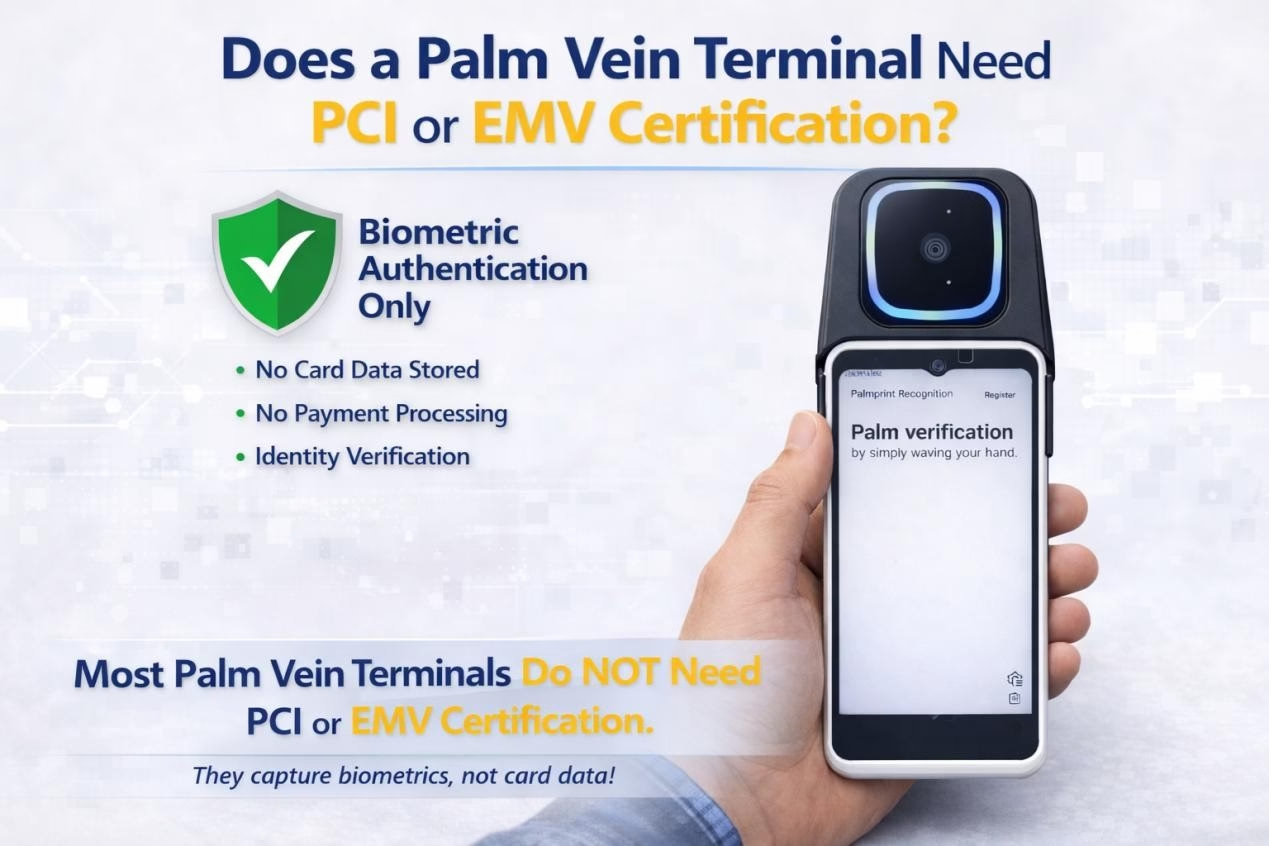
In most biometric payment deployments, palm vein terminals do not require PCI or EMV certification.
مع BioWavePass Palm Vein Tech, the device is designed purely for biometric identity authentication, not for processing payments or handling cardholder data.
This distinction allows faster deployment and significantly reduces compliance complexity.
2. What Role Does Palm Vein Tech Play in Biometric Payment?
In a modern biometric payment system, Palm Vein Tech acts as the secure identity verification layer.
BioWavePass devices are responsible for:
- Capturing palm vein and palm print data using RGB + IR
- Performing high-accuracy biometric authentication
- Returning identity verification results to backend systems
- Triggering payment authorization through connected platforms
The device itself never processes or stores payment credentials.
3. Why Palm Vein Tech Usually Does Not Require PCI or EMV
PCI and EMV certifications apply to devices that:
- Read bank cards (chip, magstripe, NFC)
- Store or transmit cardholder data
- Perform payment transactions locally
- Handle PIN input or payment authorization
BioWavePass Palm Vein Tech operates differently.
It functions as a biometric authentication gateway, where:
- Identity is verified through palm vein recognition
- Payment processing occurs in the backend system
- Tokenization is managed by the customer’s payment platform
- No card data is exposed at the device level
As a result, most biometric payment architectures using Palm Vein Tech fall outside PCI/EMV scope.
4. Biometric Payment Architecture: Separation of Responsibilities
A scalable biometric payment system typically includes:
- Identity Layer → BioWavePass Palm Vein Terminal
- Tokenization Layer → Mapping identity to payment credentials
- Transaction Layer → Payment execution via financial systems
By separating these layers, BioWavePass ensures:
- No direct interaction with sensitive financial data
- Reduced regulatory burden
- Seamless integration into existing payment ecosystems
5. When Does a Palm Vein Device Require PCI or EMV?
Certification is required only when the device becomes a payment terminal, including:
- Integrated card reader (IC/NFC/magstripe)
- PIN entry functionality
- On-device transaction processing
For these use cases, BioWavePass also provides EMV/PCI certified palm vein devices, enabling full compliance in banking and regulated fintech environments.
6. Why BioWavePass Palm Vein Tech?
BioWavePass is designed for scalable, high-security biometric payment deployments:
- Dual-mode RGB + IR biometric capture for enhanced accuracy
- Recognition speed up to 0.35 seconds in large-scale databases
- Proven performance with millions of user IDs
- AES-256 encryption with data stored only on customer-controlled servers
- Advanced AI biometric identification architecture
- SDK/API support for flexible integration
- Optional EMV/PCI certified hardware for financial-grade deployments
7. Key Takeaway
- Palm Vein Tech is primarily an identity authentication solution, not a payment processor
- Most biometric payment deployments do not require PCI or EMV certification
- Compliance depends on whether the device handles financial data
- BioWavePass supports both non-certified and certified deployment models
Final Note
As biometric payment continues to scale globally, Palm Vein Tech offers a secure, contactless, and highly accurate alternative to traditional authentication methods.
BioWavePass enables businesses to build future-ready biometric payment systems without unnecessary compliance barriers.
Learn More
Discover how BioWavePass enables next-generation biometric systems:
شارك هذه المقالة
نبذة عن الكاتب

قد يعجبك أيضاً
Scaling Palm Vein Payment: Single Server or Kubernetes Cluster?
Before You Scale Palm Vein POS: A Terminal Management Checklist
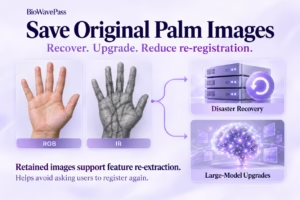
Why Saving Original Palm Images Matters for Biometric Recovery and Future Upgrades By BioWavePass
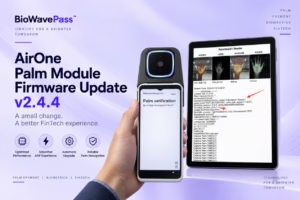
Optimizing Palm Payment Performance: AirOne Palm Module Firmware v2.4.4
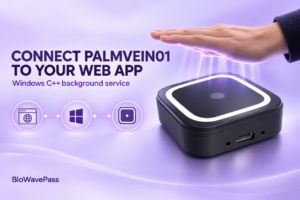
Bringing Palm Vein Scanning into a Web Workflow
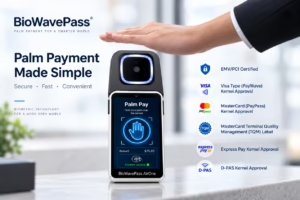
From Palm Payment MVP to Commercial Deployment: Building a Scalable Biometric Payment System
How to Integrate a USB Palm Vein Scanner with a POS Terminal
Palm Payment Goes Live in Azerbaijan: From Biometric Technology to Real-World Payment
From MVP to Market: Scaling Palm Vein Technology with BioWavePass