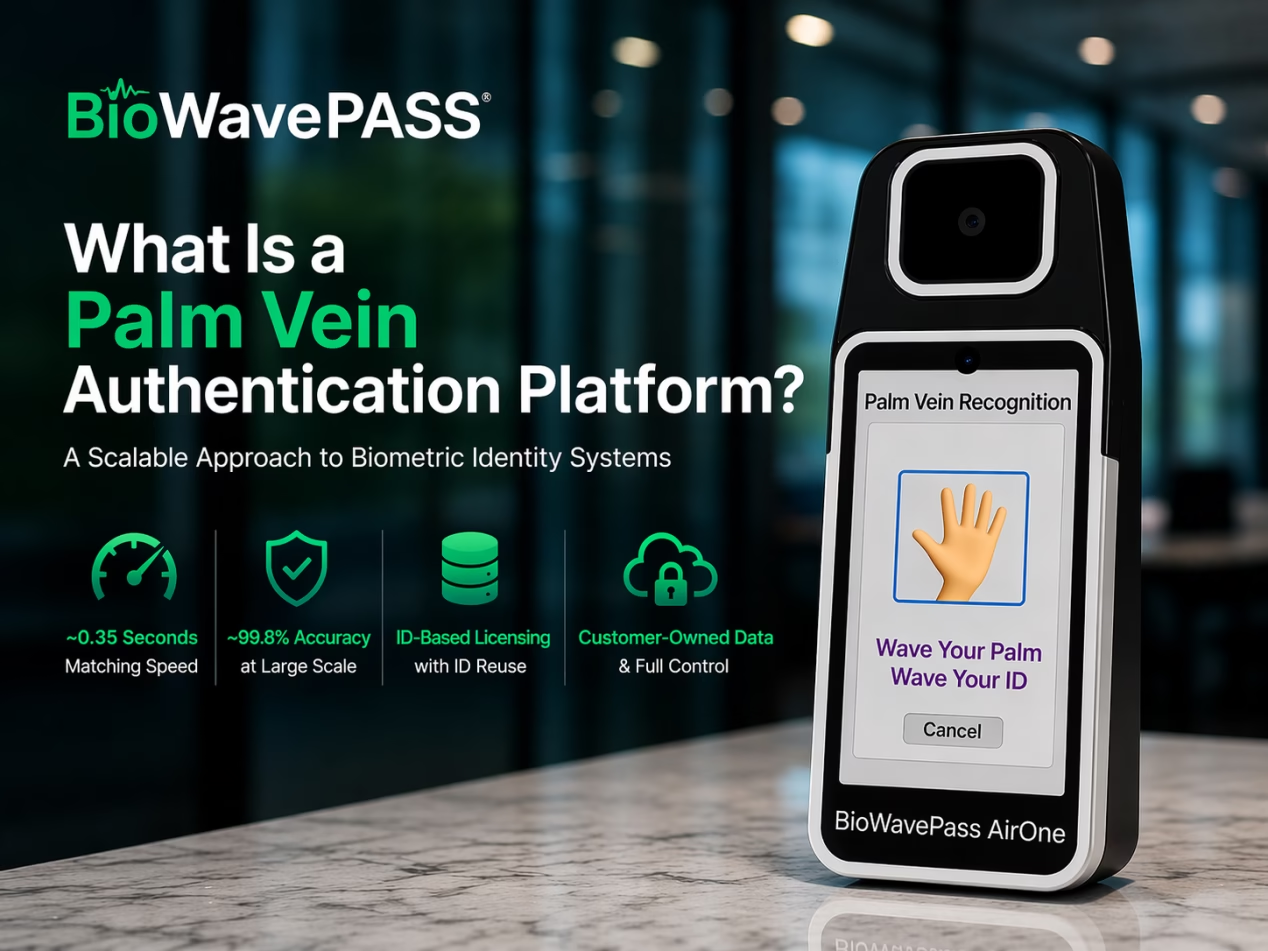
What Is a Palm Vein Authentication Platform? A Scalable Approach to Biometric Identity Systems
مقدمة
As biometric technology evolves, businesses are no longer asking whether to adopt biometrics, but:
Which biometric platform can truly scale from pilot to millions of users?
This is where the Palm Vein Authentication Platform تبرز.
Unlike traditional biometric solutions, palm vein technology is designed not only for أمان عالٍ, but also for large-scale, real-time deployment across industries such as payments, eKYC, and digital identity systems.
What Is a Palm Vein Authentication Platform?
A palm vein authentication platform is a biometric identity system that uses sub-dermal vein patterns inside the human palm to verify identity.
Because vein patterns are:
- Internal (not visible on the surface)
- Unique to each individual
- Difficult to replicate
They provide a higher level of security compared to fingerprint or facial recognition.
Why Palm Vein Technology Is Built for Scale
Most biometric systems struggle when scaling:
- Accuracy drops as databases grow
- Matching speed slows down
- System architecture becomes unstable
A palm vein authentication platform solves these issues through:
1. Dual-Mode Data Capture (RGB + IR)
- RGB captures surface features
- IR captures vein structures
👉 This creates richer data for more accurate matching
2. Feature-Based Matching Architecture
Instead of using raw images:
- The system converts data into feature vectors
- Matching is performed using vector comparison
👉 Result: faster and more scalable performance
3. GPU + Vector Database Infrastructure
Large-scale deployments rely on:
- GPU-based parallel computing
- Vector databases such as Milvus
This enables:
- High concurrency processing
- Stable performance with millions of users
Real Performance at Scale
In large-scale testing environments:
- Matching speed: ~0.35 seconds
- Accuracy: ~99.8% in large-scale databases
- Supports millions of users
These results demonstrate that palm vein technology is not just theoretical,
but ready for real-world deployment.
Understanding the ID-Based Licensing Model
One of the key differences of a palm vein authentication platform is its licensing structure.
Instead of charging per transaction:
👉 The system uses user ID-based licensing
How It Works
- Each registered user = 1 ID
- The license defines total capacity
- Deleting a user releases the ID for reuse
Why This Matters
- No transaction-based fees
- Predictable cost structure
- Flexible scaling as your user base grows
From MVP to Millions: Seamless Growth
A major challenge in biometric systems is scaling without disruption.
Palm vein platforms solve this through:
Small Model (MVP Stage)
- Supports up to 10,000 users
- Ideal for pilot and testing
- Fast deployment
Large Scale Model
- Supports hundreds of thousands to millions of users
- Designed for production environments
Seamless Upgrade
- No SDK changes required
- No need to rebuild applications
- No need for user re-enrollment
👉 As long as RGB + IR images are stored, systems can scale smoothly
Development & Testing Made Simple
To support real-world integration:
👉 Test environments are provided after sample device purchase
Including:
- Small model test server
- Large-scale algorithm test server
- API integration support
What This Means
- Developers can start immediately
- Systems can be validated before scaling
- Project risk is significantly reduced
Security and Data Ownership
Security is not just about recognition accuracy, but also about data control.
BioWavePass ensures:
- AES-256 encryption for stored data
- Secure transmission via SSL/TLS
- No vendor-side data storage
Most Important Principle
👉 All biometric data is stored on customer-controlled servers
This ensures:
- Full ownership of data
- Compliance with local regulations
- No dependency on external systems
Long-Term Support Without Vendor Lock-In
BioWavePass provides:
- 3–5 years algorithm support
- Continuous technical guidance
At the same time:
Once deployed, the system is fully controlled by the customer
- No reliance on vendor infrastructure
- No hidden operational dependency
Why Choose Palm Vein Authentication Platform?
Compared to other biometric technologies:
| Feature | وريد النخيل |
|---|---|
| الأمن | Very high (internal feature) |
| الدقة | High (~99.8%) |
| قابلية التوسع | ممتاز |
| Cost Model | Predictable (ID-based) |
| Fraud Resistance | Strong |
الخاتمة
A Palm Vein Authentication Platform is more than a biometric tool.
It is a scalable identity infrastructure designed for:
- High accuracy
- High concurrency
- Long-term growth
Final Thought
If your system needs to grow,
your biometric platform must be designed for scale from day one.
Palm vein technology delivers exactly that.
CTA
If you are planning to build a scalable biometric system:
👉 https://biowavepass.com/biowavepass-palm-vein-scanner-products/
شارك هذه المقالة
نبذة عن الكاتب

قد يعجبك أيضاً
Scaling Palm Vein Payment: Single Server or Kubernetes Cluster?
Before You Scale Palm Vein POS: A Terminal Management Checklist
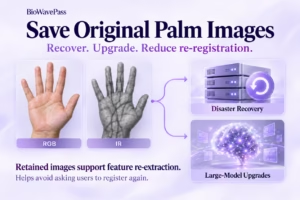
Why Saving Original Palm Images Matters for Biometric Recovery and Future Upgrades By BioWavePass
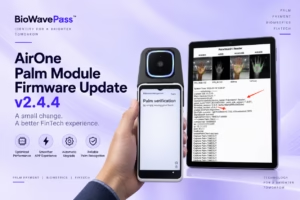
Optimizing Palm Payment Performance: AirOne Palm Module Firmware v2.4.4
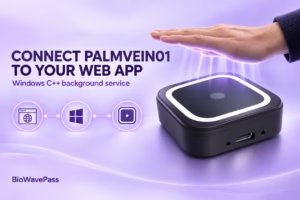
Bringing Palm Vein Scanning into a Web Workflow
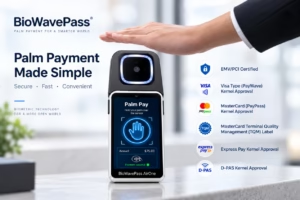
From Palm Payment MVP to Commercial Deployment: Building a Scalable Biometric Payment System
How to Integrate a USB Palm Vein Scanner with a POS Terminal
Palm Payment Goes Live in Azerbaijan: From Biometric Technology to Real-World Payment
From MVP to Market: Scaling Palm Vein Technology with BioWavePass