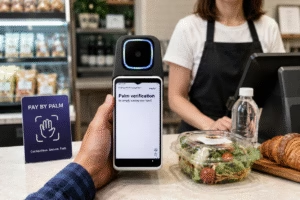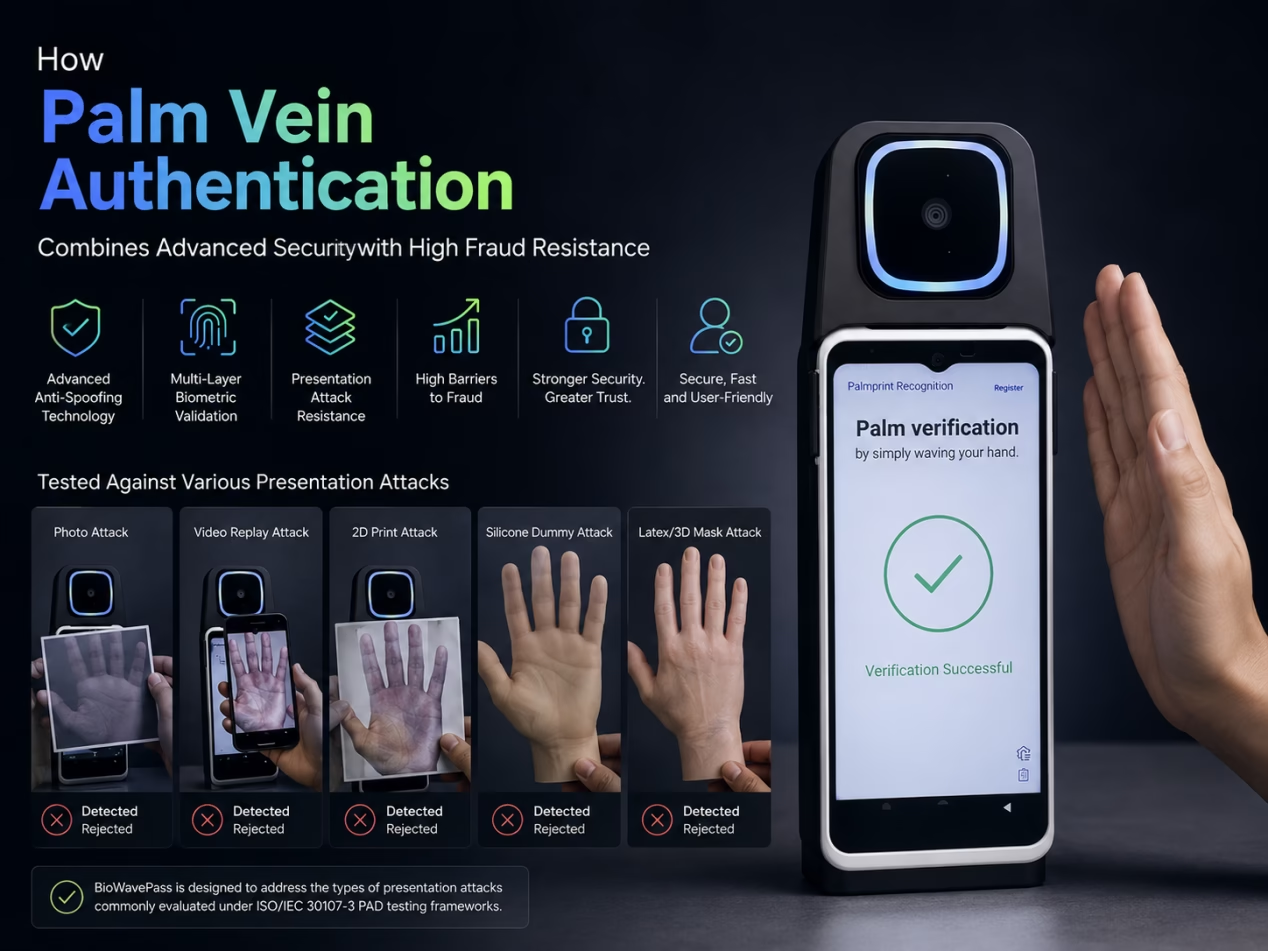
How Palm Vein Authentication Combines Advanced Security with High Fraud Resistance
As organisations increasingly adopt biometric authentication for payments, digital identity, access control, healthcare, and public services, security remains one of the most important considerations.
A common question asked by decision-makers is:
How resistant is a biometric system to fraud and spoofing attacks?
While no security technology can guarantee absolute immunity from attack, the most effective solutions combine advanced anti-spoofing technologies with security models that make fraudulent attacks increasingly difficult, expensive, and impractical.
This is where palm vein authentication offers significant advantages.
Why Palm Vein Authentication Is Different
Unlike traditional biometric technologies that rely primarily on visible characteristics, palm vein authentication analyses the unique vein patterns beneath the skin using Near-Infrared (NIR) imaging.
Because vein patterns are internal biological characteristics, they are significantly more difficult to observe, capture, and replicate than external biometric traits.
Each authentication attempt involves validating biometric information that is naturally protected beneath the skin’s surface, providing an additional layer of security compared to many conventional biometric modalities.
Multi-Layer Security by Design
BioWavePass combines multiple technologies to strengthen authentication security and reduce the risk of presentation attacks.
Key Security Mechanisms
- RGB and Near-Infrared (NIR) dual-spectrum imaging
- Palm vein structure validation
- Palm print and palm vein feature analysis
- Image quality assessment
- Multi-factor biometric matching
- Anti-spoofing and presentation attack resistance mechanisms
By combining multiple biometric signals rather than relying on a single image source, BioWavePass provides additional protection against attempts to present fake biometric samples.
As biometric security requirements continue to evolve, BioWavePass is designed to address the types of presentation attacks commonly evaluated under ISO/IEC 30107-3 Presentation Attack Detection (PAD) testing frameworks.
Security Starts with Advanced Anti-Spoofing Technology
Security is not achieved through a single feature. It requires multiple layers of protection working together.
BioWavePass has been designed to minimise attack risk through advanced anti-spoofing algorithms, multi-layer biometric validation, and continuous improvements in presentation attack resistance.
The system combines palm vein recognition with image quality assessment and biometric verification processes that help identify suspicious presentation attempts before authentication is approved.
By validating both visible palm characteristics and underlying vein patterns, the system introduces additional security barriers that help reduce the effectiveness of common spoofing methods.
The Economics of Fraud Matter
Technology is only part of the security equation.
An equally important question is:
How much would it cost an attacker to successfully create a fake biometric?
For many biometric systems, fraudsters may attempt to use photographs, printed images, video replays, or physical replicas.
Palm vein authentication presents a significantly more complex challenge.
To create a convincing presentation attack, an attacker would need to replicate not only the appearance of a person’s palm but also the underlying vein structure while simultaneously overcoming multiple layers of image validation and anti-spoofing analysis.
This increases:
- Technical complexity
- Development effort
- Specialist expertise requirements
- Material and manufacturing costs
- Testing and refinement costs
As these requirements increase, the economic viability of fraud decreases.
For most attackers, the cost of developing a successful spoofing attempt can quickly exceed the potential reward.
Multiple Layers of Defence
The strongest biometric security solutions do not rely on a single protective measure.
Instead, they combine:
Advanced Anti-Spoofing Algorithms
Designed to identify suspicious presentation attempts and reduce the risk of unauthorised authentication.
Multi-Layer Biometric Validation
Combining palm print and palm vein analysis creates multiple verification checkpoints during the authentication process.
High Barriers to Fraud
Increasing the complexity, expertise, and cost required to create a successful attack helps make fraud commercially unattractive.
Our goal is to minimise attack risk through advanced anti-spoofing algorithms, multi-layer biometric validation, and a security model where the cost and complexity of creating a successful presentation attack become prohibitively high.
The Future of Secure Authentication
As digital identity, payment systems, and secure access solutions continue to evolve, organisations require authentication technologies that provide both security and usability.
By combining technical protection with economic deterrence, palm vein authentication offers a powerful approach to reducing fraud risk while delivering a seamless user experience.
Security is strongest when both the technical barriers and the economic barriers work together.
Conclusión
Security is not simply about preventing attacks.
It is about making successful attacks increasingly difficult, expensive, and impractical.
Through advanced biometric validation, anti-spoofing technologies, and the inherent advantages of internal vein pattern recognition, BioWavePass helps organisations strengthen security and build greater confidence in digital authentication.
Frequently Asked Questions
Can palm vein biometrics be spoofed?
Like any security technology, no biometric system can claim absolute immunity from attack. However, palm vein authentication combines advanced anti-spoofing mechanisms and internal biological verification to significantly increase the difficulty of successful fraud attempts.
Does BioWavePass use liveness detection?
BioWavePass uses multiple anti-spoofing and presentation attack resistance mechanisms, including RGB and NIR analysis, palm vein structure validation, image quality assessment, and multi-factor biometric matching.
Is BioWavePass certified to ISO/IEC 30107-3?
BioWavePass has been designed to address the types of presentation attacks commonly evaluated under ISO/IEC 30107-3 PAD testing frameworks. Formal third-party certification status should be confirmed with the BioWavePass team for specific projects.
Fake Palm Attack Testing Demo Video: https://www.youtube.com/watch?v=jN8ySH0RMz0
Comparte este artículo
Sobre el autor

También le puede interesar
Scaling Palm Vein Payment: Single Server or Kubernetes Cluster?

Before You Scale Palm Vein POS: A Terminal Management Checklist
Why Saving Original Palm Images Matters for Biometric Recovery and Future Upgrades By BioWavePass
Optimizing Palm Payment Performance: AirOne Palm Module Firmware v2.4.4
Bringing Palm Vein Scanning into a Web Workflow
From Palm Payment MVP to Commercial Deployment: Building a Scalable Biometric Payment System
How to Integrate a USB Palm Vein Scanner with a POS Terminal
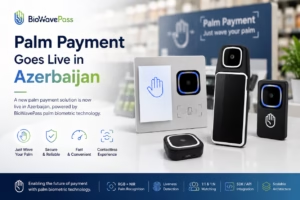
Palm Payment Goes Live in Azerbaijan: From Biometric Technology to Real-World Payment
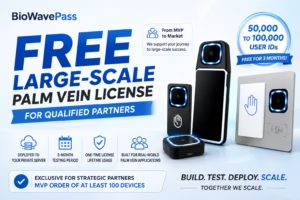
From MVP to Market: Scaling Palm Vein Technology with BioWavePass