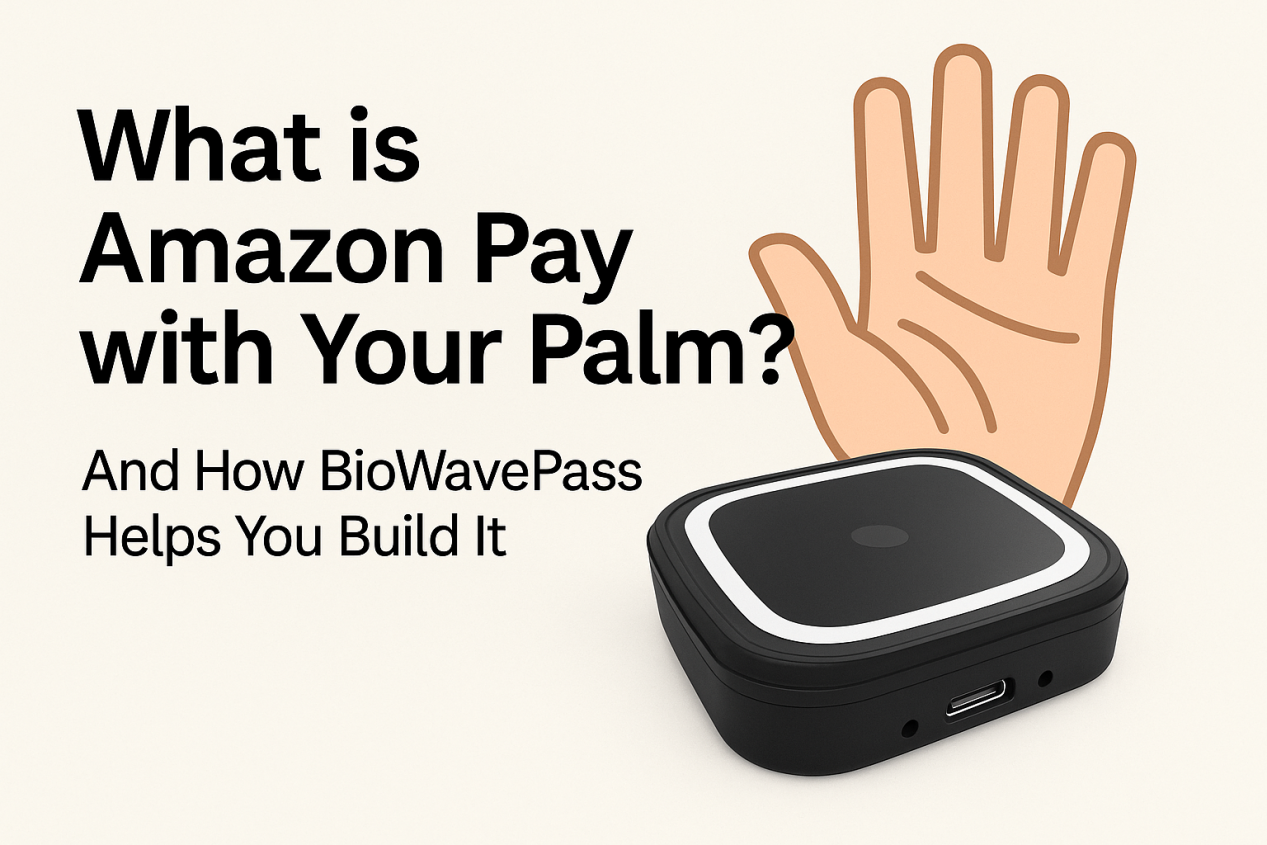
¿Qué es Amazon Pay con la Palm? Y cómo BioWavePass te ayuda a crearlo
Los pagos con Palm ya no son una visión del futuro: son reales, rápidos y seguros.
Amazon Uno introdujo una experiencia de pago con la palma de la mano sin fisuras, que permite a los usuarios simplemente pasar la mano para completar las transacciones. El núcleo de esta experiencia es reconocimiento de las venas de la palma de la mano, que verifica tanto estructura venosa interna y huella palmar externa.
Con BioWavePass lectores de las venas de la palma de la mano, esta potente solución biométrica está ahora abierta a los innovadores en fintech, venta al por menor, y transporte-sin ser Amazon.
🛒 ¿Qué es exactamente “pagar con la palma de la mano”?
Los pagos con la palma de la mano funcionan registrando el identidad biométrica única, combinando:
- ✅ Trazado de venas subdérmicas (captado con luz IR).
- ✅ Huella palmar visible (capturada con imagen RGB).
Una vez inscritos, los usuarios pueden pasar la mano por encima de un escáner para efectuar el pago: sin teléfono, sin cartera, sin tarjeta.
Este sistema ya está activo en comercio sin cajeros, aeropuertos, y redes de transporte globalmente.
🔍 Cómo funciona: La tecnología detrás de la autenticación de Palm
-
Fase de inscripción
El sistema utiliza cámaras duales para escanear RGB (huella palmar) + IR (venas). -
Creación de plantillas biométricas
Estas características se convierten en plantillas de identidad cifradas, sin almacenar nunca imágenes en bruto. -
Autenticación en tiempo real
En el siguiente escaneado, el sistema compara los datos de la palma con las plantillas existentes para aprobar el pago o el acceso al instante.
💼 Por qué esto es importante para las fintech, el comercio minorista y la movilidad inteligente
Para implantar la biometría de la palma de la mano no es necesario crear todo desde cero ni trabajar con grandes empresas tecnológicas.
Con Hardware BioWavePass, como:
- WavePass500 - Escáner de palma basado en Android con NFC
- PalmVein 01 - Lector de venas de la palma de la mano USB compatible con Windows/Linux/Android
...tu equipo puede al instante:
- 💳 Lanza tu propio Palm Pay solución
- 🧼 Ofrecer un KYC higiénico y sin contacto para el onboarding.
- 🔐 Uso coincidencia de nube privada o servidor local
- 🏷️ Construir monederos biométricos de marca blanca o soluciones de autofacturación
🔐 ¿Qué hace diferente a BioWavePass?
Muchos sistemas se basan únicamente en sensores IR, que captan las venas.
BioWavePass combines both IR + RGB, enabling:
- 🎯 Dual-mode recognition = 1 in 100 billion false accept rate
- 📷 RGB also supports QR code capture for hybrid workflows
- 💡 RGB + IR fusion increases spoof resistance and liveness detection
✅ Additional features:
- SDK & API support for fast integration
- Supports multi-OS: Windows, Linux, Android
- Optional geo-lock & MDM integration
- OEM/ODM customization available for scale-up deployments
🌍 Lleva los pagos con Palm a tu región
Whether you’re creating:
- 🏬 A smart retail experience
- 🚆 A biometric transit pass
- 🧾 A next-gen self-service kiosk
- 🧑💼 A government eKYC gateway
BioWavePass gives you a robust biometric foundation—ready to deploy, ready to scale.
📩 Want to build your own “Pay with Palm” solution?
Let’s get started: [email protected]
📱 WhatsApp: +86 198 6084 3404
PalmPay #PalmScanner #PalmVein #BiometricPayments #BioWavePass #FintechInnovation #ContactlessPayment #KYC #SmartRetail #PalmVeinScanner
Comparte este artículo
Sobre el autor

También le puede interesar
Can a Palm Vein SDK Capture Data Without an Algorithm Server?
Palm Vein Image Encryption: Why AES-256-GCM Alone Does Not Guarantee Compatibility
Large-Scale Palm Vein Recognition: How to Test the SDK and Plan for Growth
Palm Vein Payment SDK: Direct Algorithm Server Integration or Your Own Backend?
Palm Vein Deployment Support: Who Can Access Your Servers?
Scaling Palm Vein Payment: Single Server or Kubernetes Cluster?
Before You Scale Palm Vein POS: A Terminal Management Checklist
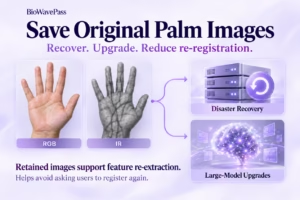
Why Saving Original Palm Images Matters for Biometric Recovery and Future Upgrades By BioWavePass
Optimizing Palm Payment Performance: AirOne Palm Module Firmware v2.4.4