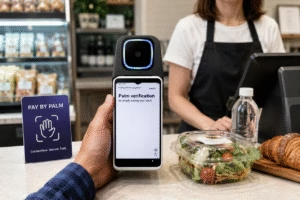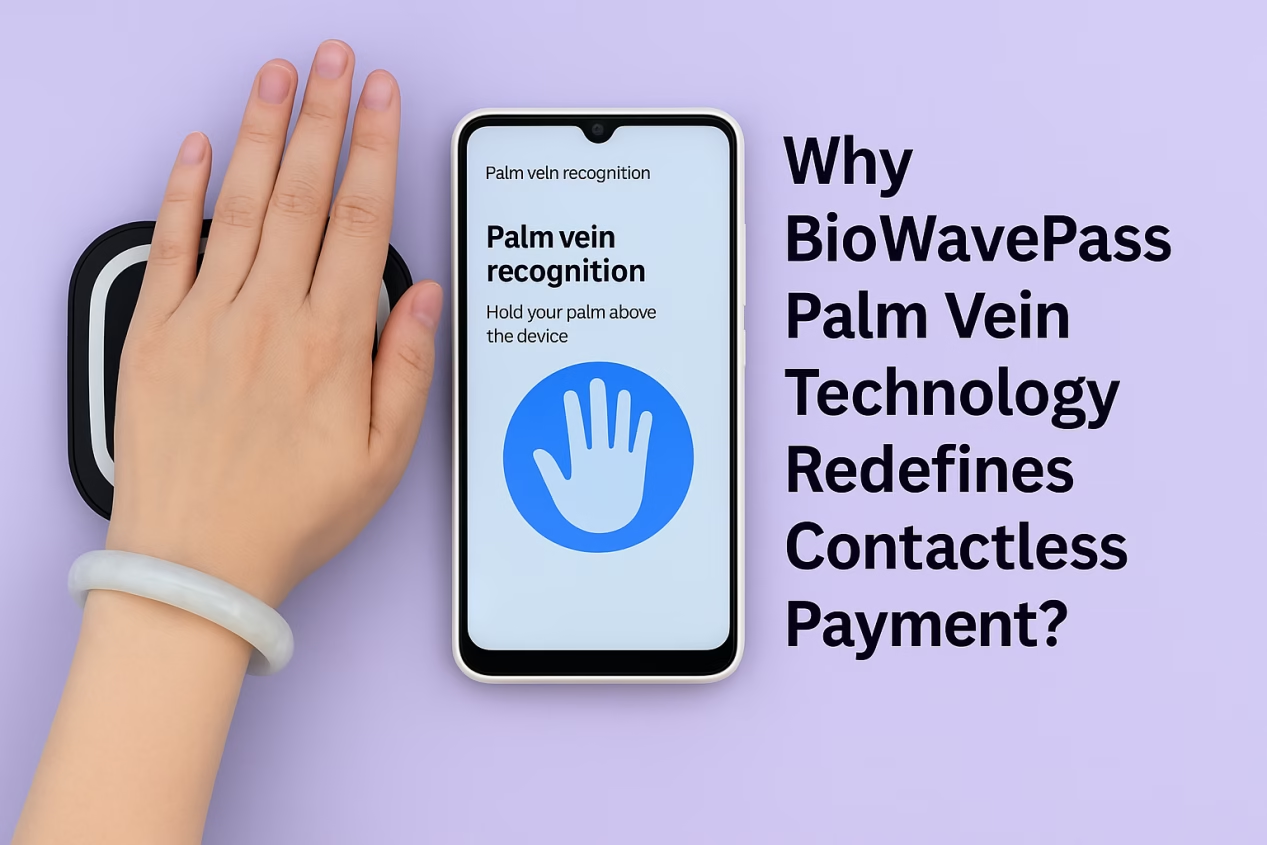
¿Por qué la tecnología BioWavePass Palm Vein redefine el pago sin contacto?
💳 Introduction
Contactless payment is no longer optional — it’s the foundation of modern transactions.
Yet, traditional methods such as cards, QR codes, and mobile wallets remain vulnerable to fraud, cloning, and device dependency.
Tecnología BioWavePass Palm Vein introduces a new era of secure and touchless payments, purpose-built for banks, fintech platforms, and government programs that demand both accuracy y compliance.
🤝 Contactless by Design
Unlike fingerprints or facial systems, palm vein biometrics never require physical contact.
BioWavePass scanners detect hands from 5–15 cm away, offering:
- Zero-touch authentication — ideal for public terminals and high-traffic locations
- Improved hygiene and user accessibility
- Seamless experience — no phone, card, or password required
This makes Palm Vein Payment perfect for retail stores, hospitals, transport systems, and citizen ID kiosks.
🎯 Dual-Mode Accuracy with RGB + IR
Where most systems rely solely on infrared, BioWavePass enhances precision with Imágenes de doble espectro RGB + IR, ensuring both liveness detection y anti-spoofing.
| Mode | FRR @ FAR=1e-6 | Accuracy Note |
|---|---|---|
| RGB (Palm Print) | 1.002% | Surface recognition |
| IR (Palm Vein) | 1.52% | Subcutaneous recognition |
| Combinado (RGB + IR) | 1e-11 | 1 in 100 billion false accept rate |
This dual-modality system delivers bank-grade biometric accuracy, even in databases exceeding 5 million IDs.
⚙️ Scalable Infrastructure for Real-World Payment Systems
BioWavePass is built to support both pilot projects y national payment ecosystems.
- Average matching speed: 315 ms per verification
- Validated on a 5M+ user dataset
- Optimized for both cloud y on-premise deployments
It’s a production-ready framework designed for fintechs, eKYC integrators, and government identity programs.
🏗️ Hardware Built for Integration
BioWavePass provides a flexible hardware lineup tailored for every deployment need:
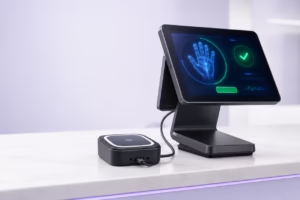
- Lector USB PalmVein01 – A compact biometric scanner compatible with Android, Linux, and Windows SDKs, perfect for POS or kiosks.
- WavePass500 Biometric POS – EMV/PCI-certified Android POS terminal that supports palm vein, NFC, chip cards, and QR code payments.
This enables institutions to introduce Palm Vein Payment gradually, without disrupting existing systems.
🚀 Developer Advantage: SDK and Flutter Plugin
BioWavePass doesn’t just offer hardware — it’s a developer platform.
- Comprehensive SDKs & APIs for enrollment, matching, and template management
- SDK del complemento de Flutter for fast, cross-platform app development
- 10,000 free cloud ID matches for pilot testing
- End-to-end software support, from sandbox to commercial deployment
This developer-first approach allows fintech teams to launch prototypes within hours, accelerating time-to-market while ensuring compliance and performance.
🧠 Why Palm Vein Payment Is the Future
| Payment Method | Limitación | Palm Vein Advantage |
|---|---|---|
| QR Codes | Requires internet and phone | Works offline, secure and device-free |
| Cards / NFC | Can be lost, cloned, or stolen | Bound to unique biometric identity |
| Facial ID | Affected by lighting, masks | Works in all lighting conditions |
| Fingerprint | Prone to surface wear | Contactless and hygienic |
En BioWavePass Palm Vein System bridges security and convenience, delivering a future-proof standard for digital payments and identity verification.
✨ Conclusion
Tecnología BioWavePass Palm Vein redefines contactless payment by merging speed, security, and scalability into a unified platform.
Con dual-spectrum imaging, developer-friendly SDKs, y global deployment expertise, BioWavePass is more than hardware — it’s the next generation of biometric payment infrastructure.
Check more about the Palm Vein Scanner Payment: https://biowavepass.com/palm-payment-technology/
Comparte este artículo
Sobre el autor

También le puede interesar
Scaling Palm Vein Payment: Single Server or Kubernetes Cluster?
Before You Scale Palm Vein POS: A Terminal Management Checklist
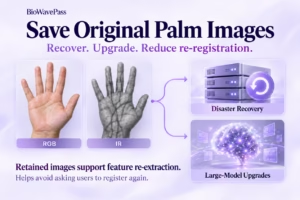
Why Saving Original Palm Images Matters for Biometric Recovery and Future Upgrades By BioWavePass
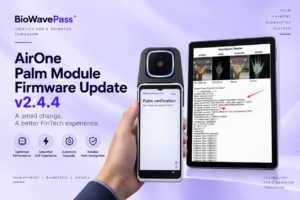
Optimizing Palm Payment Performance: AirOne Palm Module Firmware v2.4.4
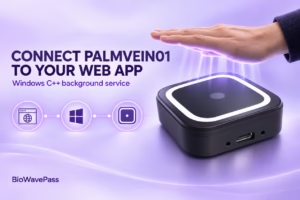
Bringing Palm Vein Scanning into a Web Workflow
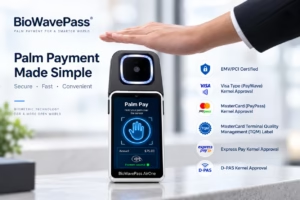
From Palm Payment MVP to Commercial Deployment: Building a Scalable Biometric Payment System
How to Integrate a USB Palm Vein Scanner with a POS Terminal
Palm Payment Goes Live in Azerbaijan: From Biometric Technology to Real-World Payment
From MVP to Market: Scaling Palm Vein Technology with BioWavePass