¿Por qué el SDK BioWavePass Palm Vein Reader es la opción más inteligente para los desarrolladores Fintech?
Los equipos de Fintech y eKYC a menudo se enfrentan al mismo reto: conseguir un funcionamiento piloto biométrico en marcha rápidamente.
El hardware y los SDK tradicionales requieren largos ciclos de integración, complejas configuraciones en la nube y revisiones de seguridad que ralentizan el progreso.
Por eso BioWavePass construyó su Escáner biométrico de venas de la palma de la mano y SDK de tecnología Palm Vein con una mentalidad "primero el desarrollador", diseñado para velocidad, privacidad e implantación en el mundo real.
⚙️ ¿Qué ralentiza a los pilotos?
Las API poco claras, la documentación fragmentada del SDK y las compilaciones con muchas dependencias pueden retrasar la validación del proyecto durante semanas.
BioWavePass elimina esos obstáculos gracias a su SDK del complemento de Flutter, API estables y una estructura de despliegue ligera.
🚀 ¿Qué hace diferente al SDK de BioWavePass?
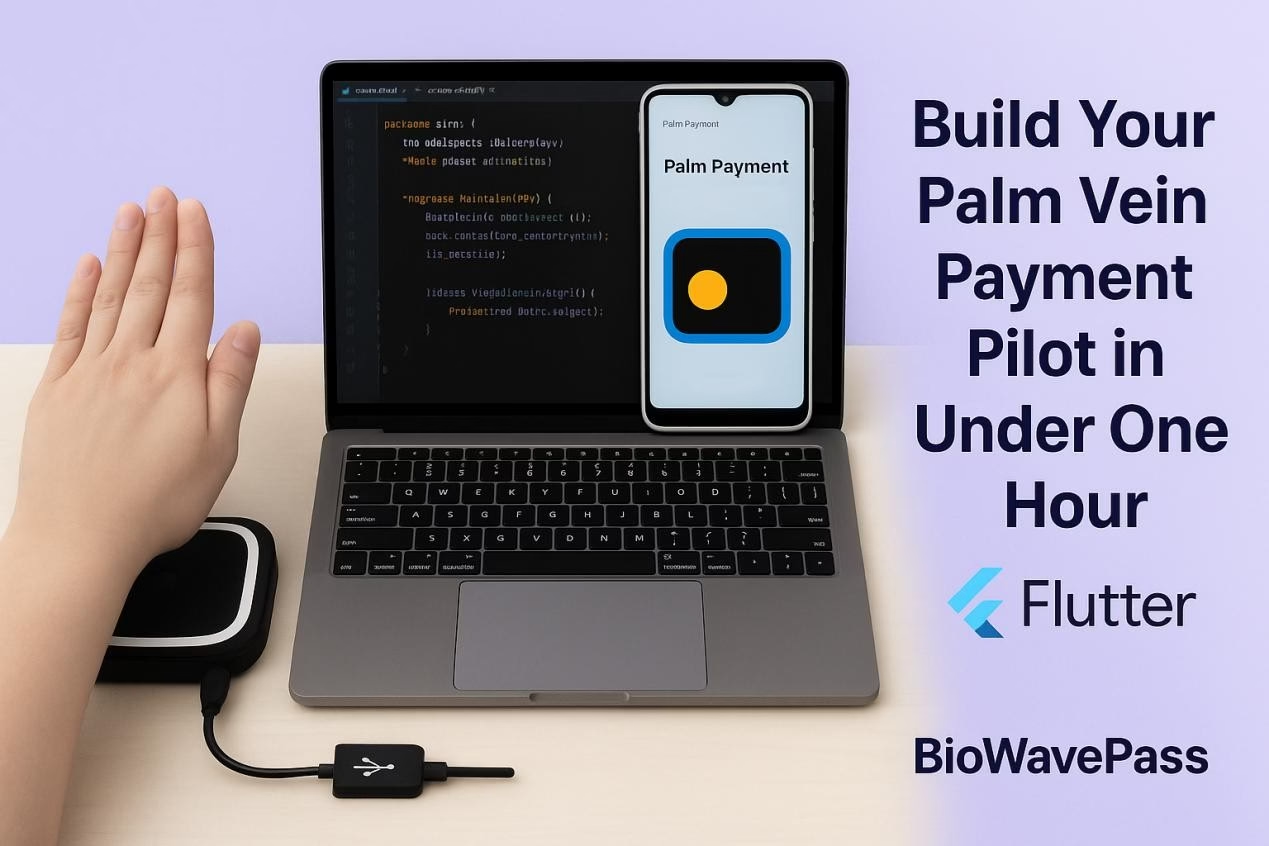
En SDK de tecnología BioWavePass Palm Vein incluye un SDK del complemento de Flutter que permite a los desarrolladores crear y probar más rápidamente en varias plataformas sin necesidad de complejos puentes o codificación nativa.
Principales ventajas del SDK de complementos de Flutter:
- ⚙️ Soporte multiplataforma - Construir una vez, desplegar en todas partes Android, Windows, y Linux.
- 💡 Integración rápida - Utilice la recarga en caliente de Flutter para probar el reconocimiento de la palma de la mano al instante.
- 📱 Interfaz de usuario/UX unificada - Desarrolle aplicaciones nativas para dispositivos móviles y TPV.
- 🔐 Flujo de datos seguro - Mantenga el control total de las plantillas biométricas en su propio servidor.
Los desarrolladores ya pueden lanzar su primer Pago de la vena de la palma o eKYC pilotar más rápido: sin middleware complejo ni dependencia de nubes de terceros.
⏱️ ¿Con qué rapidez puede mostrar valor?
- 7 minutos: Configure un servidor privado con la sencilla guía de despliegue del SDK.
- 1 hora: Validar Coincidencia de características de la vena de la palma en su propio entorno de nube.
Desde la instalación hasta la prueba de concepto, BioWavePass permite realizar una demostración completa en menos de una hora.
🧩 ¿Qué obtienen los desarrolladores?
- ✅ API estables para Inscríbase en, Actualización, Revocar, y Partido operations
- ✅ Reference projects for fintech and government use cases
- ✅ Dual support for Android, Linux, y Windows
- ✅ Free 10,000-ID cloud license for testing and sandbox pilots
Everything is designed to help you move from MVP to commercial deployment faster.
🔒 ¿Hasta qué punto es preciso y seguro?
BioWavePass’s Palm Vein Scanner uses RGB + IR dual-sensor fusion for precise feature extraction and real liveness detection.
Performance Highlights:
- Recognition speed: 0,35 segundos
- Accuracy: 99%+ success rate in large-scale ID databases
- Spoof resistance: Detects fake palms or printed images instantly
- Privacy: All feature data and templates stay inside your own infrastructure
🧠 Por qué es importante almacenar las imágenes de Palm
Even during small-scale pilots, BioWavePass recommends enabling image saving to support future scalability.
When moving from small (≤10K users) to large-scale algorithms, pre-stored palm images (RGB + IR) allow higher model accuracy without forcing users to re-register.
Conclusión
For developers and fintech innovators, speed and precision are everything.
En SDK de tecnología BioWavePass Palm Vein, powered by the SDK del complemento de Flutter, helps you build, test, and validate Pago de la vena de la palma o eKYC pilots in record time — securely and efficiently.
Go from zero to verified pilot in under one hour with BioWavePass Palm Vein Scanner SDK — built for the future of biometric payments.
Learn More: palm-payment-technology
Comparte este artículo
Sobre el autor

También le puede interesar
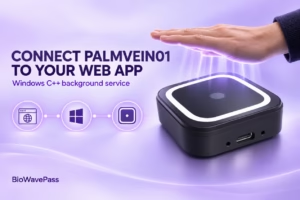
Bringing Palm Vein Scanning into a Web Workflow
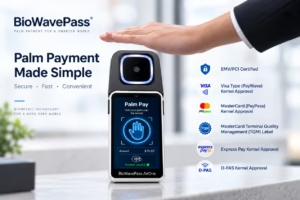
From Palm Payment MVP to Commercial Deployment: Building a Scalable Biometric Payment System
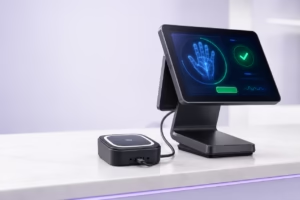
How to Integrate a USB Palm Vein Scanner with a POS Terminal
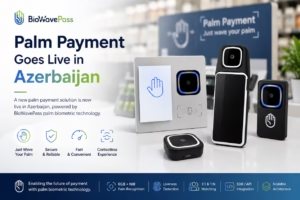
Palm Payment Goes Live in Azerbaijan: From Biometric Technology to Real-World Payment
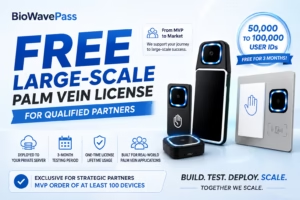
From MVP to Market: Scaling Palm Vein Technology with BioWavePass
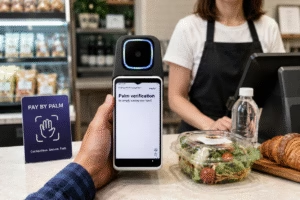
Palm Vein Payment: How Biometric Payments Work Without Cards or Phones
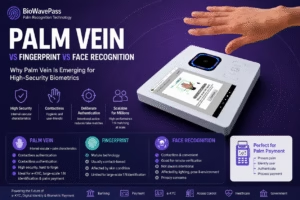
Palm Vein vs Fingerprint vs Face Recognition: Why Palm Vein Is Emerging for High-Security Biometrics
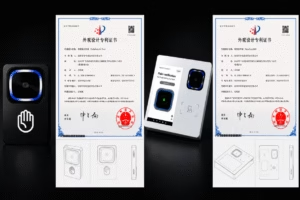
BioWavePass Palm Vein Scanner Products Receive Design Patent Certification
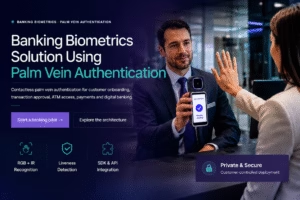
Palm Vein Authentication: The Future of Secure Digital Identity and Payments