Why BioWavePass Palm Vein Payment Technology Is Shaping the Future of Secure Payments
Payments are changing quickly. Customers want checkout to be faster, safer, and easier. Businesses, meanwhile, need better ways to reduce fraud, protect identity, and create a smoother payment experience.
This is where BioWavePass palm vein payment technology becomes highly relevant.
By combining contactless biometric authentication with secure identity verification, BioWavePass offers a practical way to support the next generation of payment experiences.
What Is BioWavePass Palm Vein Payment Technology?
BioWavePass palm vein payment technology uses near-infrared light to read the vein pattern inside a person’s palm.
This pattern is unique to each individual and sits beneath the skin, which makes it much harder to copy or fake than many external biometric features.
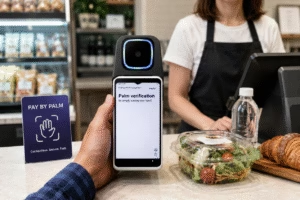
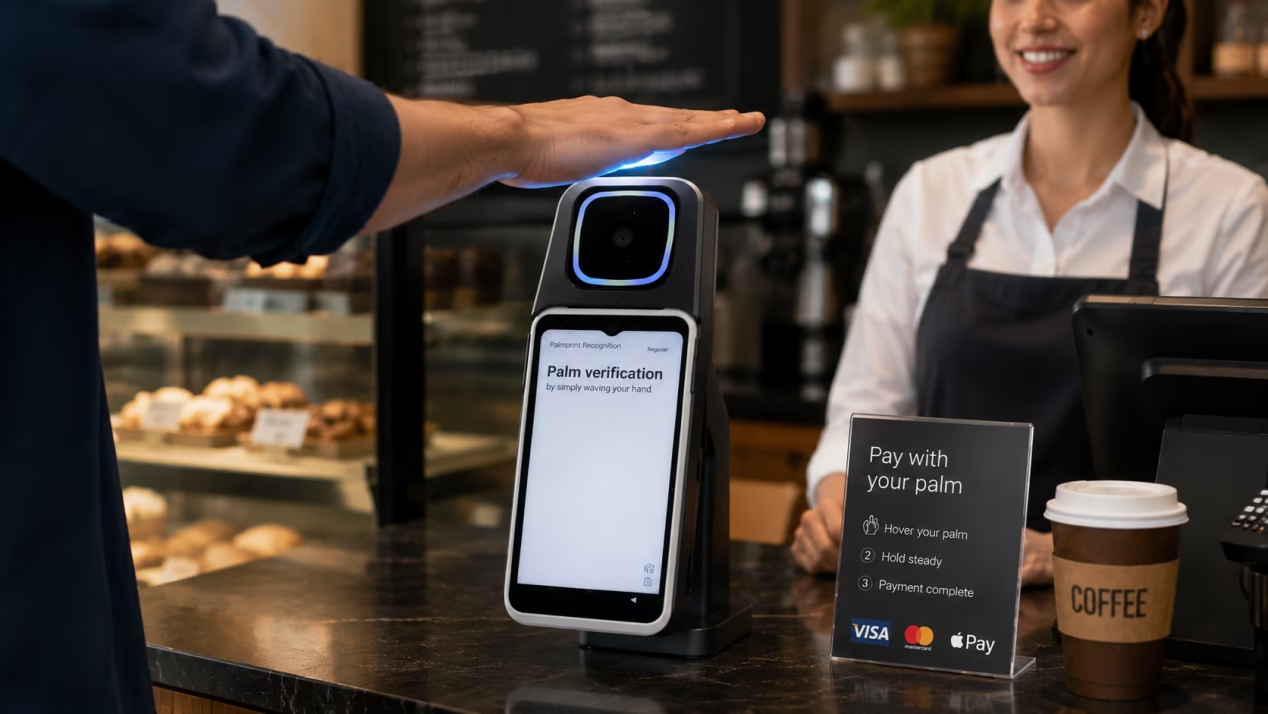
The process is simple. A user places or waves their palm above the scanner, and the system verifies their identity within seconds. There is no need to touch the device, enter a PIN, carry a card, or open a mobile app.
For payment environments, that simplicity matters.
Why Palm Vein Authentication Stands Out
Biometric authentication is not new. Fingerprints, facial recognition, and iris recognition are already used in many industries. But each method has its own limitations.
Palm vein recognition is different because it reads internal biometric information. Since the vein pattern is not visible on the surface of the skin, it is more difficult to capture, copy, or reproduce.
It also works without physical contact, which makes it suitable for public payment scenarios where hygiene and speed both matter.
Key advantages include:
- Contactless authentication
- Strong resistance to spoofing
- Fast user verification
- High accuracy
- No password or PIN required
- No card or phone required for identity verification
- Stable biometric characteristics over time
For payments, this balance of security and convenience is exactly what many businesses are looking for.
BioWavePass Palm Vein POS Terminals
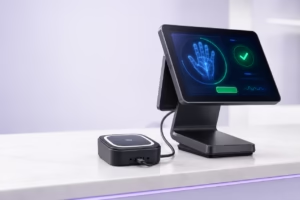
A BioWavePass Palm Vein POS Terminal combines payment acceptance with biometric identity verification.
Instead of relying only on a bank card, PIN, password, or mobile device, customers can verify their identity using the unique vein pattern in their palm.
This can be useful in many scenarios, including:
- Retail checkout
- Banking counters and self-service terminals
- Restaurants and quick-service environments
- Self-service kiosks
- Transportation ticketing
- Healthcare registration
- Membership and loyalty payment systems
- Government and public service identity verification
The goal is not simply to add another payment method. The bigger value is creating a secure identity layer that can support faster and more trusted transactions.
Security Benefits for Payment Environments
Security is one of the biggest reasons organizations are paying attention to BioWavePass palm vein payment technology.
Traditional credentials can be lost, stolen, guessed, shared, or copied. Cards can be misplaced. PINs can be observed. Passwords can be leaked. Even some biometric methods can be affected by surface traces or image-based spoofing attempts.
Palm vein recognition reduces many of these risks because the biometric feature is internal and difficult to replicate.
For payment use cases, this can help provide:
- Better protection against identity fraud
- Lower risk of credential theft
- Reduced dependence on passwords and PINs
- More secure customer verification
- A contactless experience for public environments
- An additional authentication layer for high-value transactions
When combined with existing payment security technologies, BioWavePass can strengthen the overall transaction process without making the user experience more complicated.
Working with Existing Payment Systems
BioWavePass palm vein payment technology does not have to replace current payment infrastructure.
In many deployments, the palm vein module works as an identity authentication layer, while the existing payment system continues to handle transaction processing, encryption, authorization, and settlement.
This matters for banks, retailers, and system integrators because it allows biometric authentication to be introduced step by step.
A well-designed BioWavePass Palm Vein POS Terminal can support secure identity verification while still working with familiar payment flows and backend systems.
Where BioWavePass Can Be Used
BioWavePass palm vein payment technology is not limited to retail checkout. Its value becomes even stronger in environments where identity accuracy, speed, and security are all important.
Financial Services
Banks can use BioWavePass for customer identification at branches, ATMs, smart counters, and self-service terminals.
Vente au détail
Retailers can make checkout faster while improving security for loyalty programs, member payments, and repeat customers.
Soins de santé
Hospitals and clinics can use BioWavePass palm vein recognition to identify patients accurately without requiring physical contact.
Transport
BioWavePass can support fast passenger verification for ticketing, access control, and transit payment systems.
Government and Public Services
Government agencies can use BioWavePass palm vein recognition for secure identity verification in public service delivery, benefit distribution, and citizen authentication.
Why It Matters for the Future of Payments
The future of payments is not only about moving money faster. It is also about knowing that the right person is making the transaction.
As digital payments, self-service terminals, and identity-based services continue to grow, authentication becomes a bigger part of the payment experience.
BioWavePass fits this direction well. It is contactless, secure, fast, and easy for users to understand.
For businesses, it can help improve trust and reduce fraud. For customers, it can make payment feel simpler and more natural.
That is why BioWavePass Palm Vein POS Terminals are becoming an important part of next-generation payment and identity infrastructure.
Conclusion
BioWavePass palm vein payment technology offers a practical way to improve both payment security and user experience.
By using internal biometric characteristics, it provides strong resistance to spoofing and identity fraud. By working contactlessly, it also creates a cleaner and more convenient experience for public payment environments.
As the payment industry continues to move toward faster, safer, and more intelligent transactions, BioWavePass Palm Vein POS Terminals are well positioned to play a growing role in secure payment authentication.
Learn more from: https://biowavepass.com/mobile-palm-vein-pos-terminal/
Partager cet article
A propos de l'auteur

Vous pourriez aussi aimer
Scaling Palm Vein Payment: Single Server or Kubernetes Cluster?
Before You Scale Palm Vein POS: A Terminal Management Checklist
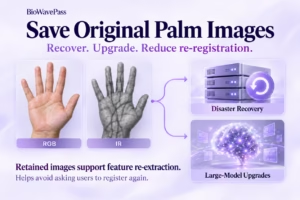
Why Saving Original Palm Images Matters for Biometric Recovery and Future Upgrades By BioWavePass
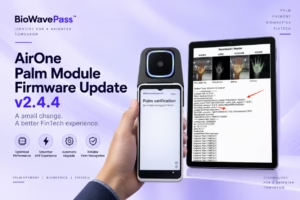
Optimizing Palm Payment Performance: AirOne Palm Module Firmware v2.4.4
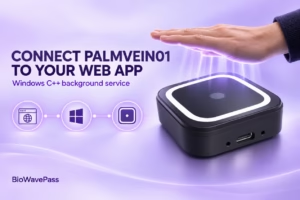
Bringing Palm Vein Scanning into a Web Workflow
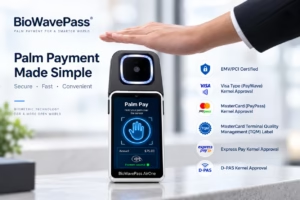
From Palm Payment MVP to Commercial Deployment: Building a Scalable Biometric Payment System
How to Integrate a USB Palm Vein Scanner with a POS Terminal
Palm Payment Goes Live in Azerbaijan: From Biometric Technology to Real-World Payment
From MVP to Market: Scaling Palm Vein Technology with BioWavePass