Palm Pay Case Study: 30,000 Palm Vein Payment Devices Deployed for a Kazakhstan Banking Project in Just a Few Months
Location: Kazakhstan
Industry: Banking and Fintech
Technology: Palm Vein Recognition | Palm Payment | Biometric Authentication
Palm Payment Is Moving into Large-Scale Financial Deployment
Palm vein recognition is becoming an increasingly practical option for secure, contactless authentication in financial and retail environments. Its internal biometric characteristics, touch-free operation, and fast recognition make it suitable for high-traffic payment scenarios.
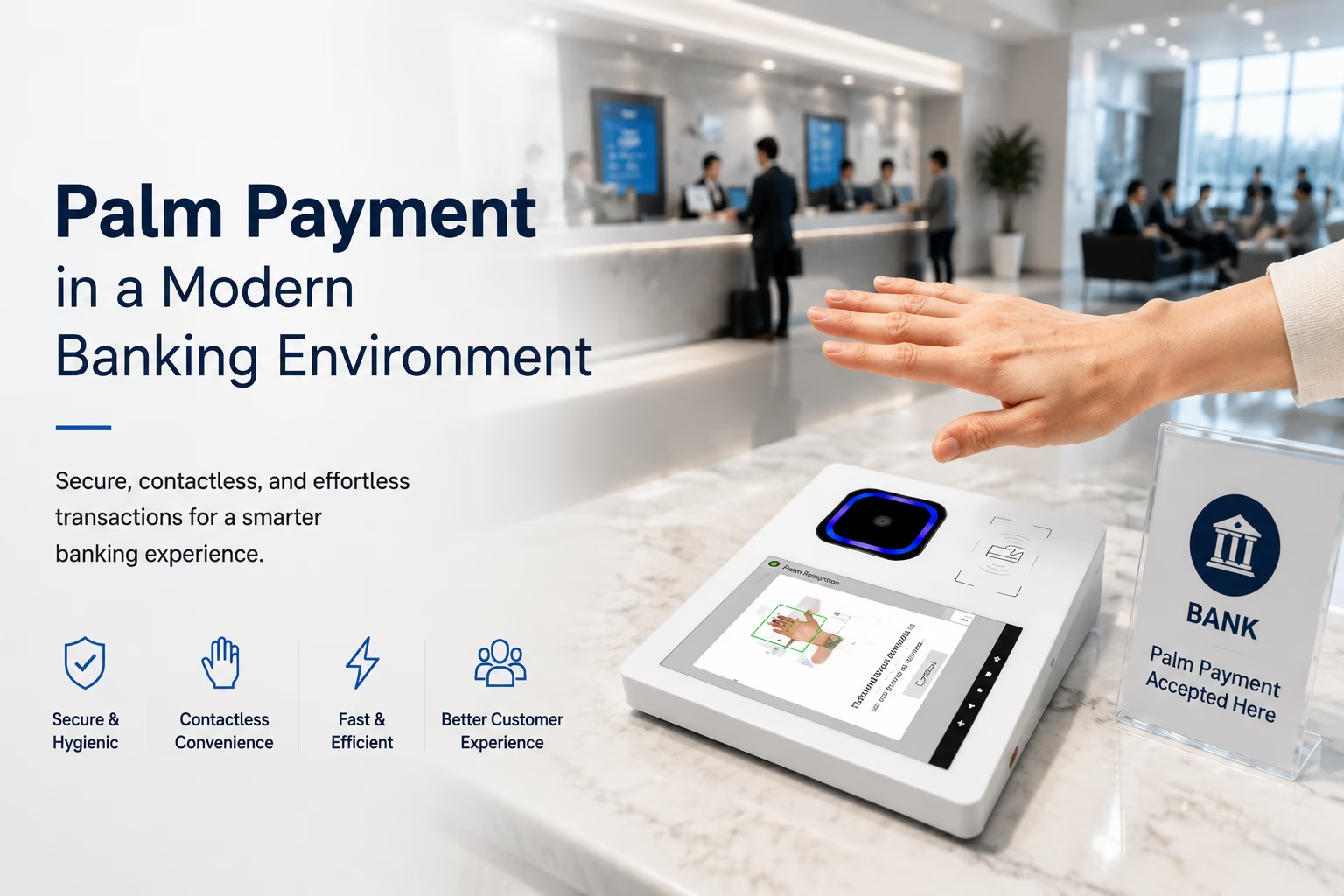
A large-scale palm payment project in Kazakhstan deployed approximately 30,000 palm vein payment devices within just a few months. The deployment demonstrates how biometric payment infrastructure can move from initial testing to commercial-scale implementation within a relatively short period.
For commercial and confidentiality reasons, the financial institution involved in this project is not identified in this case study.
Rapid Deployment Designed for Future Growth
The project progressed from testing to large-scale installation within just a few months. Deployment planning covered device integration, biometric enrollment, system connectivity, and operational preparation.
The system architecture was designed to support future expansion. It included a biometric matching model capable of supporting up to one million enrolled user IDs, providing capacity for continued adoption without requiring a fundamental redesign of the recognition workflow.
Why Palm Vein Recognition Is Suitable for Financial Services
Compared with conventional authentication methods, palm vein recognition offers several practical advantages:
- Contactless authentication: Users do not need to touch a sensor.
- Strong biometric security: Internal vascular patterns are difficult to reproduce.
- Fast recognition: Suitable for high-traffic payment environments.
- Simple user experience: Authentication requires only a natural palm gesture.
- Flexible integration: Supports payment terminals, applications, and backend platforms.
- Controlled deployment: Can support private-server and customer-controlled data environments.
These characteristics make palm vein authentication suitable for banks, payment platforms, fintech companies, and retailers seeking to improve identity verification and payment convenience.
BioWavePass Technology for Large-Scale Deployment Scenarios
BioWavePass provides palm vein recognition components for commercial payment and identity projects, including:
- Palm vein scanning hardware
- SDK and API integration
- Biometric feature extraction and matching
- Private-server deployment options
- Scalable user-ID models
- Technical support for testing, integration, and rollout
Project scope and implementation responsibilities vary according to the customer’s payment platform, regulatory environment, and deployment model.
A Scalable Model for Palm Payment
The Kazakhstan deployment shows the operational potential of palm vein authentication in large-scale payment environments. It also demonstrates the importance of combining biometric hardware, integration software, and scalable matching infrastructure within a complete deployment plan.
The information presented here is based on BioWavePass project experience and internal deployment records. It does not constitute an endorsement by, or an official joint publication with, any financial institution or third-party brand.
Explore Palm Payment Integration
BioWavePass supports pilot testing, SDK integration, private deployment, and commercial-scale palm vein authentication projects.
[Contact BioWavePass]
to discuss your payment platform, expected user capacity, device requirements, and deployment environment.
Disclaimer
This case study is based on BioWavePass project experience and internal deployment records. It is not sponsored, approved, or endorsed by any financial institution or third-party brand mentioned or implied. Any deployment figures are provided for general informational purposes and should be supported by appropriate internal records before publication.
Share this article
About the Author

You might also like
Bringing Palm Vein Scanning into a Web Workflow
From Palm Payment MVP to Commercial Deployment: Building a Scalable Biometric Payment System
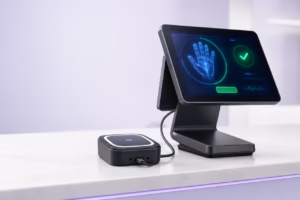
How to Integrate a USB Palm Vein Scanner with a POS Terminal
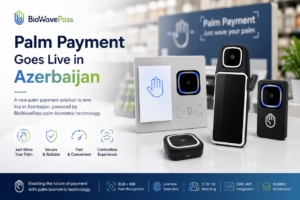
Palm Payment Goes Live in Azerbaijan: From Biometric Technology to Real-World Payment
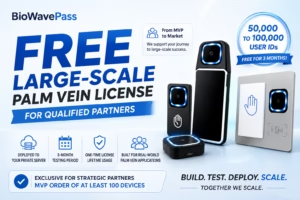
From MVP to Market: Scaling Palm Vein Technology with BioWavePass
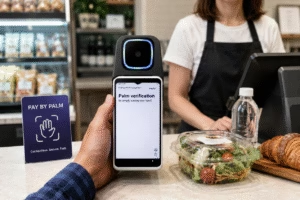
Palm Vein Payment: How Biometric Payments Work Without Cards or Phones
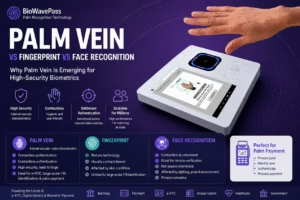
Palm Vein vs Fingerprint vs Face Recognition: Why Palm Vein Is Emerging for High-Security Biometrics
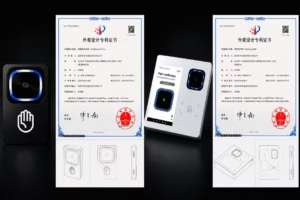
BioWavePass Palm Vein Scanner Products Receive Design Patent Certification
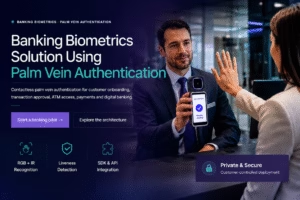
Palm Vein Authentication: The Future of Secure Digital Identity and Payments