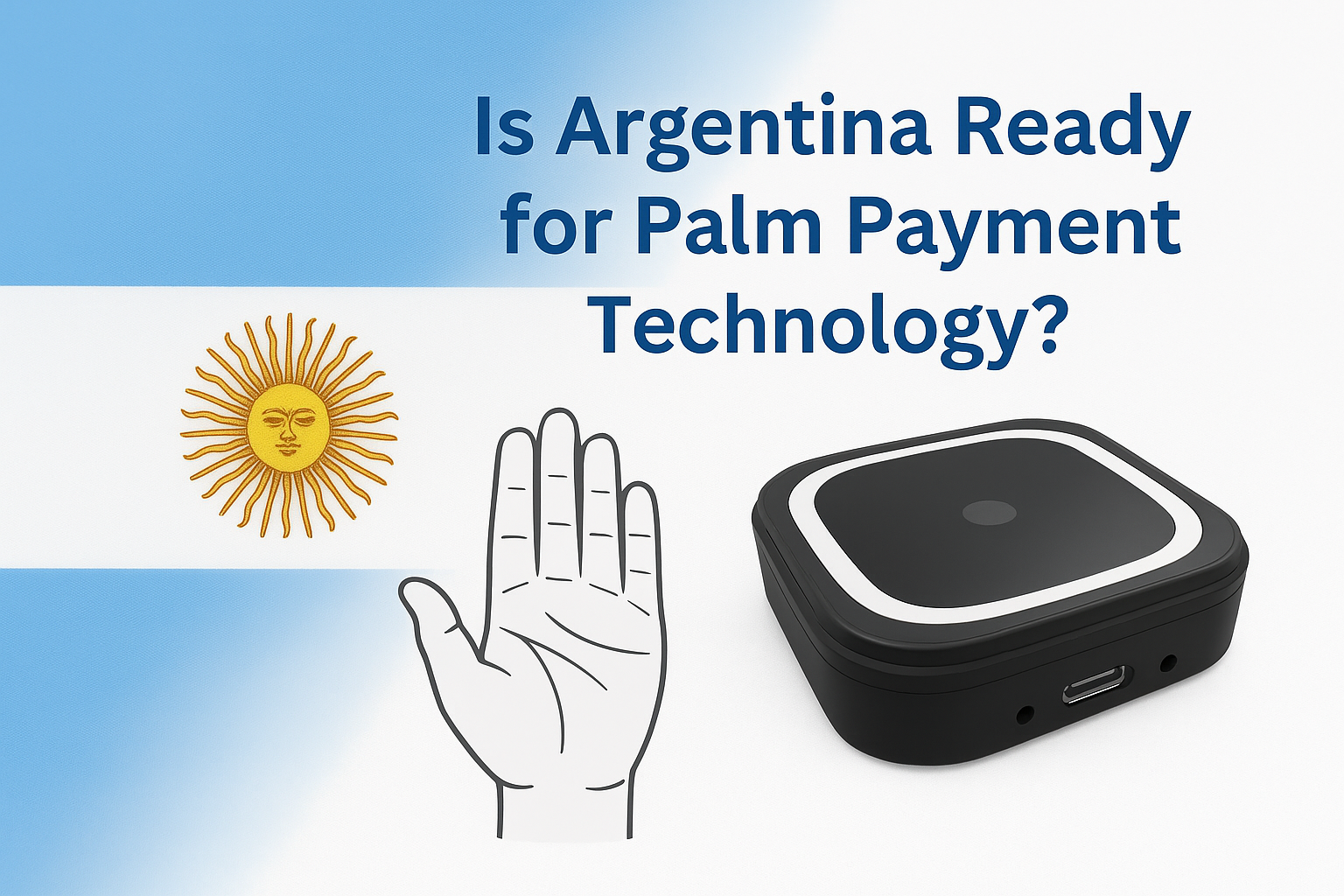
A Argentina está pronta para a tecnologia de pagamento com a palma da mão?
Argentina is entering a new era in its digital economy. As fraud, impersonation, and authentication friction challenge traditional methods, the country needs secure, device-based, and contactless verification more than ever.
É aí que Reconhecimento de veias da palma da mão steps in — a proven biometric solution that powers fast, secure, and phone-free payments, now gaining interest across Latin America.
🖐 What Is Palm Payment and Why Now?
Pagamento com palma da mão identifies users through the vein patterns beneath their palm skin, using infrared light e AI-enhanced matching — without needing physical contact, phones, or PINs.
Key benefits for Argentina’s environment:
- ✅ Non-replicable internal patterns = Maximum anti-fraud protection
- ✅ Contactless and hygienic = Ideal for public-facing use cases
- ✅ <0.35s speed, 99.9%+ match rate = Smooth experience, even at scale
This biometric method is already transforming payment infrastructure in Asia and is now ready to solve Latin America’s pain points.
📈 Argentina’s Market Needs a New Approach
Several sectors in Argentina are actively looking for secure, non-mobile identity tools:
- 🏦 Banks & fintech companies → moving beyond SMS OTPs and passwords
- 🚌 Transportation & public sector → require scalable identity systems for KYC
- 🛒 Retail & fuel stations → need fast, frictionless checkout
Current challenges in the region:
- High rates of card skimming & theft
- Low smartphone penetration in rural areas
- Identity impersonation and fraud in social benefit programs
Palm scanners offer a network-independent, hardware-first solution.
Porquê o BioWavePass?
BioWavePass delivers enterprise-grade biometric terminals with key advantages:
| Caraterística | Benefício |
|---|---|
| Dual Sensor (RGB + IR) | Captures palm vein + palm print, making spoofing nearly impossible |
| <0.35s Matching Time | Ultra-fast processing, even with millions of IDs |
| Private or On-Device Matching | Doesn’t require cloud dependency or internet access |
| Tested on 5M+ ID Databases | Suitable for government and financial-grade deployments |
| Full SDK Available | Easy integration into Argentina’s fintech ecosystem |
Our devices are engineered for offline compatibility, low power draw, e field deployment — ideal for local merchants or national infrastructure alike.
🛍️ Where Palm Payment Fits in Argentina
- Fuel Stations → Avoid card theft & skimming at unmanned terminals
- Retail Chains → Enable instant checkout with just your palm
- ATMs & Banks → Strengthen account authentication and KYC
- Healthcare Facilities → Validate patient identity securely and quickly
- Government Welfare Programs → Deliver aid accurately with biometric verification
🌐 Argentina Is Ready — Let’s Launch the Future
BioWavePass brings Latin America a payment solution that’s:
- 🌐 Contactless
- 🔐 Secure
- 📱 Independent from smartphones
- ⚡ Lightning-fast
- 🤝 Easy to integrate
Argentina’s payment ecosystem is ready for the leap. We’re ready to help you build it.
👉 Want to pilot palm payment in Argentina?
📧 [email protected]
📱 WhatsApp: +86 198 6084 3404
Web: https://biowavepass.com/
#PalmPayment #BioWavePass #ArgentinaTech #BiometricAuthentication #PalmScanner #ContactlessPayments #FintechLatinAmerica #SecureID #IRandRGB
Partilhar este artigo
Sobre o autor

Também pode gostar
Bringing Palm Vein Scanning into a Web Workflow
From Palm Payment MVP to Commercial Deployment: Building a Scalable Biometric Payment System
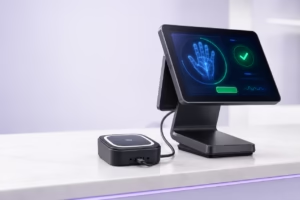
How to Integrate a USB Palm Vein Scanner with a POS Terminal
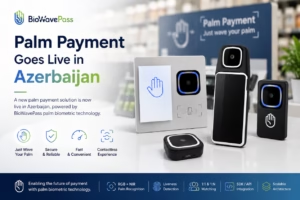
Palm Payment Goes Live in Azerbaijan: From Biometric Technology to Real-World Payment
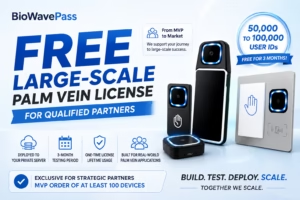
From MVP to Market: Scaling Palm Vein Technology with BioWavePass
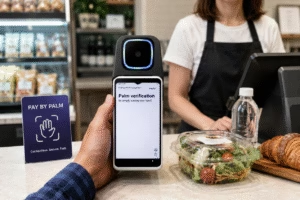
Palm Vein Payment: How Biometric Payments Work Without Cards or Phones
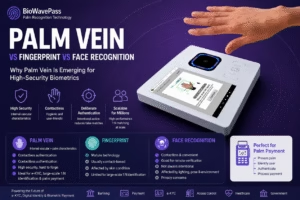
Palm Vein vs Fingerprint vs Face Recognition: Why Palm Vein Is Emerging for High-Security Biometrics
BioWavePass Palm Vein Scanner Products Receive Design Patent Certification
Palm Vein Authentication: The Future of Secure Digital Identity and Payments