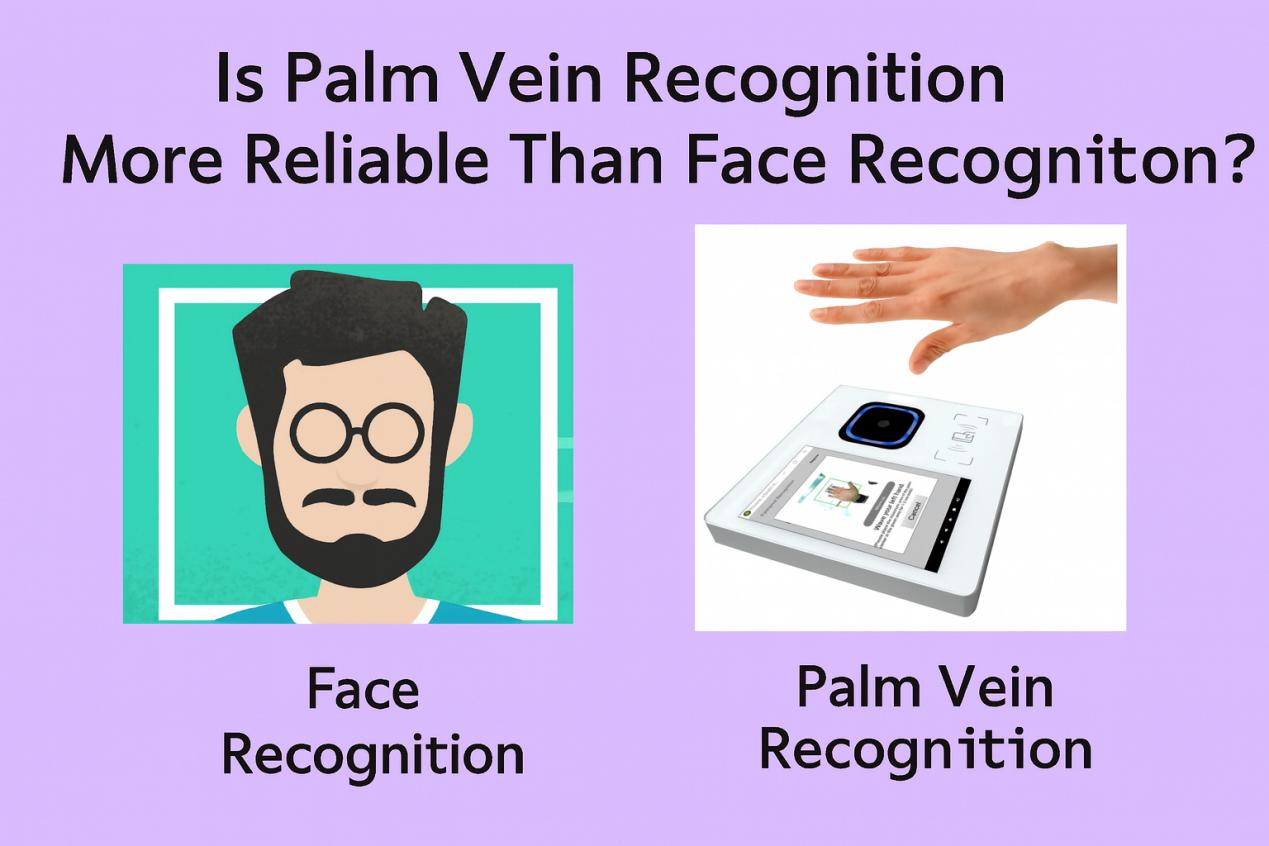
O reconhecimento das veias da palma da mão é mais fiável do que o reconhecimento facial?
When it comes to biometrics, many people think face recognition is “good enough.” But is it really reliable for banks, healthcare, or government-scale projects? Let’s look at a quick test that shows the difference — and why BioWavePass Palm Vein Recognition is a safer choice.
I tried paying with my face on a mobile payment app while wearing a thin gauze face mask. Most of my facial structure was hidden, yet the transaction still went through instantly.
It felt convenient, but here’s the issue: if half a face can pass verification, it means the system is only checking a limited number of points. In reality, this type of transaction should not have been approved. For industries that need accuracy at scale, that’s a big problem.
Next, I tested palm vein recognition under the same condition — covering my palm with the same gauze mask. This time, the verification failed completely. Why? Because palm vein technology doesn’t rely on surface features. It scans the unique blood vessel structure and live blood flow beneath the skin. That’s why it’s nearly impossible to fake or bypass.
For users, this means their payments and IDs are secure.
For industries, it means scalability and trust, even with millions of users.
With BioWavePass Palm Vein Solutions, we bring this standard of protection to real-world deployments. Our devices use RGB + IR dual imaging e AI-powered algorithms to guarantee both accuracy and stability — exactly what industries need.
Face Recognition vs Palm Vein Recognition
| Aspect | Face Recognition | Palm Vein Recognition (BioWavePass) |
|---|---|---|
| Feature Points | 60–80 key points; ~128–512 dimensions in deep models | 300–1,000+ vein points; 512–1024+ dimensions |
| Stability with Age | Changes with age, weight, expression, posture — frequent updates required | Stable after ~6 years old and remains unchanged for life |
| Environmental Influence | Affected by lighting, makeup, hairstyle, occlusion | Subcutaneous veins — unaffected by skin tone, wrinkles, or lighting |
| Uniqueness | Can look similar, especially for twins or close relatives | Each vein pattern is unique, nearly impossible to duplicate |
| Speed vs Risk | Fast but higher false acceptance risk; vulnerable to spoofing and deepfakes | Slightly slower, but extremely accurate and reliable at scale |
| Anti-Spoofing | Can be tricked by photos, videos, 3D masks | Verified by blood flow, making spoofing nearly impossible |
| Applications | Phone unlock, casual access, consumer payments | Banking, healthcare, government, enterprise security, high-value payments |
| Database Scalability | Accuracy drops beyond 100k–1M users | >99% accuracy even across millions of IDs |
Porque é que é importante
Face recognition seems easy and fast, but in reality, it’s risky for industries handling sensitive data and large populations. Speed without accuracy can create serious vulnerabilities.
Palm vein recognition, on the other hand, offers:
- Lifetime stability (after age 6, vein patterns don’t change)
- Stronger protection (requires blood flow to verify identity)
- Escalabilidade (keeps accuracy even with millions of IDs)
That’s why BioWavePass Palm Vein Solutions are trusted by banks, healthcare providers, and governments worldwide.
Palm vein recognition isn’t just safer than face recognition — it’s the new standard for industries that demand both security and reliability.
Learn more from:https://biowavepass.com/
Partilhar este artigo
Sobre o autor

Também pode gostar
Bringing Palm Vein Scanning into a Web Workflow
From Palm Payment MVP to Commercial Deployment: Building a Scalable Biometric Payment System
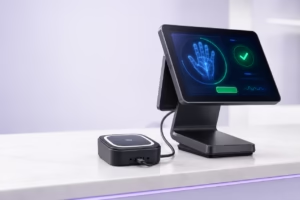
How to Integrate a USB Palm Vein Scanner with a POS Terminal
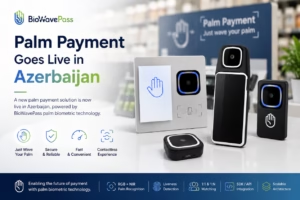
Palm Payment Goes Live in Azerbaijan: From Biometric Technology to Real-World Payment
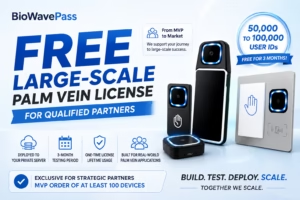
From MVP to Market: Scaling Palm Vein Technology with BioWavePass
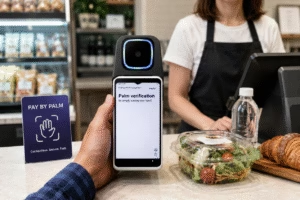
Palm Vein Payment: How Biometric Payments Work Without Cards or Phones
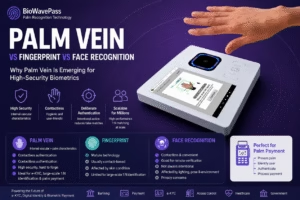
Palm Vein vs Fingerprint vs Face Recognition: Why Palm Vein Is Emerging for High-Security Biometrics
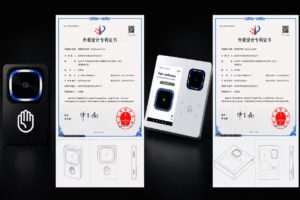
BioWavePass Palm Vein Scanner Products Receive Design Patent Certification
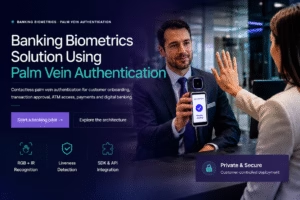
Palm Vein Authentication: The Future of Secure Digital Identity and Payments