¿Cómo lanzar el pago Palm Vein y eKYC en su propia nube en menos de una hora?
The next evolution of digital identity is here — Tecnología Palm Vein.
But most enterprises hesitate because they believe launching Pago de la vena de la palma o eKYC systems requires long integration cycles, high licensing costs, and complex compliance reviews.
That’s no longer true.
Con BioWavePass, your team can deploy a fully functional Palm Vein Payment and eKYC system on your own private cloud in under an hour — secure, compliant, and production-ready.
🎯 What Outcome Should Fintech and Government Teams Target?
Every enterprise wants the same result:
✅ A secure, compliant, y scalable biometric pilot that runs entirely on their infrastructure.
BioWavePass delivers exactly that — combining the Escáner biométrico de venas de la palma de la mano with the SDK de tecnología Palm Vein, so you can own your data, validate performance, and control every layer of the system.
⚙️ The Quick Rollout Recipe (Under 1 Hour)
Here’s how you can build your first Pago de la vena de la palma o eKYC MVP — fast:
1️⃣ Provision your private cloud (AWS, Azure, or on-prem server)
2️⃣ Follow the setup manual — complete deployment in about 7 minutes
3️⃣ Enroll users and test Coincidencia de características de la vena de la palma via the SDK
4️⃣ Review logs, latency, and accuracy metrics within your own infrastructure
You’ll go from zero to a live biometric validation environment — all in under one hour.
🔒 Why “Privacy by Design” Matters
In regulated industries like banking, fintech, y public sector eKYC, compliance is non-negotiable.
En BioWavePass SDK ensures all biometric templates, palm features, and verification logs remain inside your servers.
✅ No external processing
✅ No PII transfer
✅ No data leakage risks
This approach keeps audits simple and compliance officers happy — especially under frameworks like GDPR, ISO/IEC 19794, y PCI DSS.
🖐️ What Hardware and SDK Enable This?
En BioWavePass Palm Vein Solution combines high-precision hardware with developer-first SDK tools to make integration seamless.
Palm Vein Scanner Highlights:
- Dual RGB + IR imaging for true liveness detection
- Sub-second recognition (≈0.35s) with Precisión 99%
- AES-256-CBC encryption for data security
- USB, OTG, and RS232 interface support
Palm Vein Technology SDK:
- Stable APIs for enroll, match, revoke, and update
- Built-in SDK del complemento de Flutter for rapid cross-platform app development
- Sample apps and code snippets for fintech, eKYC, y POS integration
- Cloud and on-prem matching support
🔄 Does It Support Legacy Workflows?
Yes — the BioWavePass WavePass500 series is designed for hybrid environments.
You can run palm authentication alongside traditional card-based payments:
- ISO7816 Contact Smart Cards
- ISO14443A/B NFC and Contactless Cards
This ensures a smooth migration from legacy banking systems to palm-first digital identity frameworks — without excluding existing customers.
🧩 How Do You De-risk the Decision?
Not sure where to start?
BioWavePass includes a free 10,000-ID cloud matching license for MVP testing.
You can:
- Simulate real user volumes
- Measure latency under live load
- Validate matching accuracy
- Optimize infrastructure sizing
All before committing to full-scale deployment.
✅ Conclusion: Biometric Readiness in Under One Hour
Con BioWavePass, launching Pago de la vena de la palma y eKYC doesn’t take months — it takes minutes.
You can deploy in 7 minutes, validate in 1 hour, and scale confidently — all under your own compliance and infrastructure control.
Fast. Secure. Developer-Friendly.
That’s what makes Tecnología BioWavePass Palm Vein the foundation of the next generation of payment and identity systems.
Learn More: Palm-Payment-Technology
Comparte este artículo
Sobre el autor

También le puede interesar
Scaling Palm Vein Payment: Single Server or Kubernetes Cluster?
Before You Scale Palm Vein POS: A Terminal Management Checklist
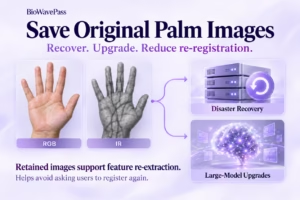
Why Saving Original Palm Images Matters for Biometric Recovery and Future Upgrades By BioWavePass
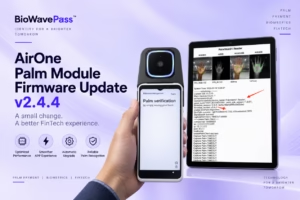
Optimizing Palm Payment Performance: AirOne Palm Module Firmware v2.4.4
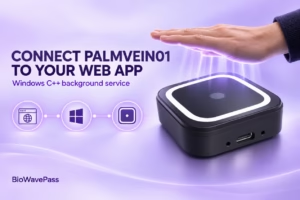
Bringing Palm Vein Scanning into a Web Workflow
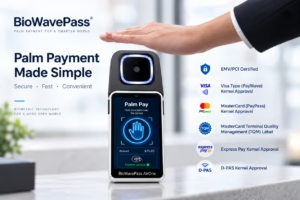
From Palm Payment MVP to Commercial Deployment: Building a Scalable Biometric Payment System
How to Integrate a USB Palm Vein Scanner with a POS Terminal
Palm Payment Goes Live in Azerbaijan: From Biometric Technology to Real-World Payment
From MVP to Market: Scaling Palm Vein Technology with BioWavePass