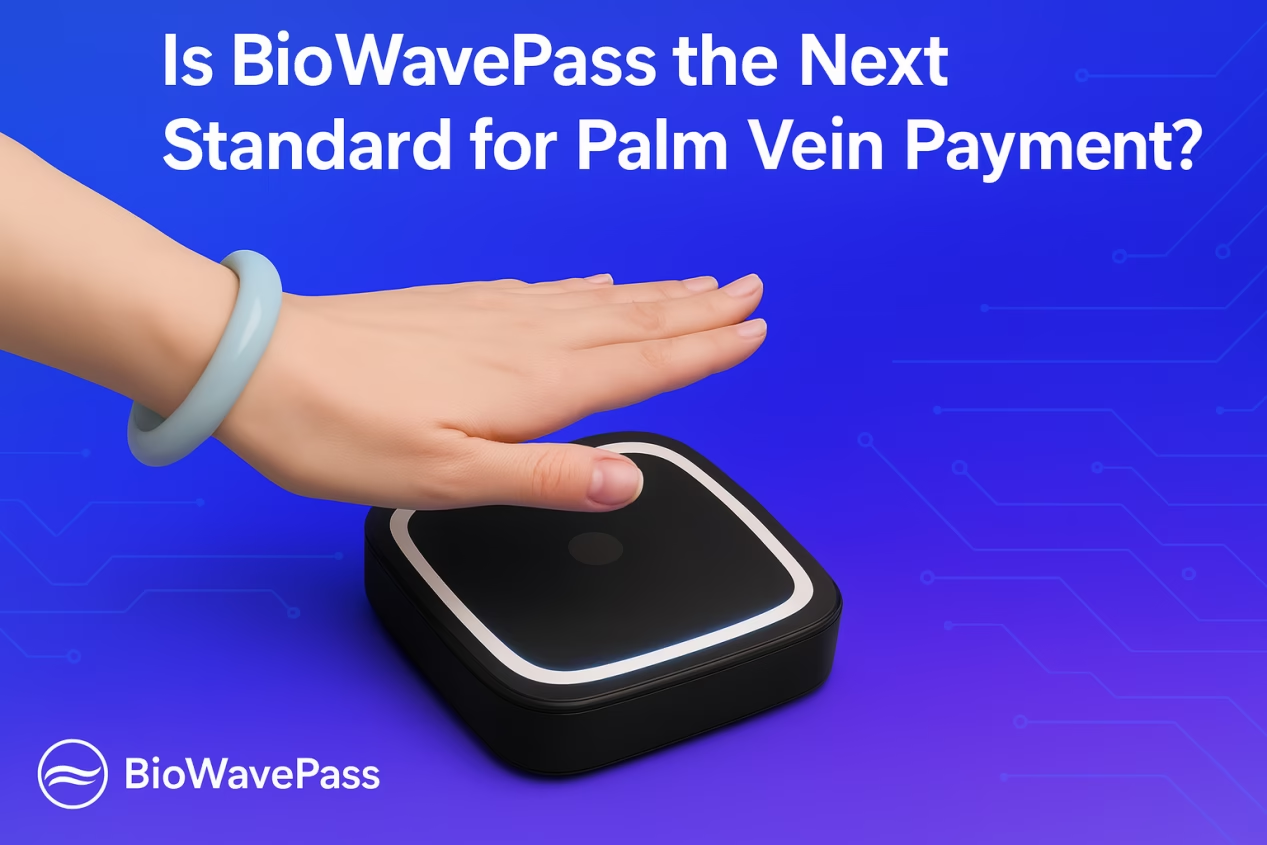
¿Es BioWavePass el próximo estándar para el pago a través de la vena de la palma de la mano?
El ecosistema mundial de pagos está evolucionando más rápido que nunca. de las tarjetas de plástico a los monederos digitales, y ahora, a verificación biométrica de la identidad.
Mientras los bancos y las empresas de tecnología financiera tratan de eliminar el fraude y mejorar la experiencia del usuario, una pregunta define la próxima era de la innovación:
👉 ¿Qué tecnología biométrica está realmente preparada para unos pagos escalables, seguros e inclusivos?
Aunque las huellas dactilares y el reconocimiento facial tienen su lugar, ambos se enfrentan a problemas persistentes de fiabilidad y suplantación.
Ahí es donde Tecnología BioWavePass Palm Vein establece una nueva referencia en materia de seguridad, escalabilidad y facilidad de uso.
🔐 Seguridad de doble capa: RGB + IR para una autenticación a prueba de fraudes
A diferencia de los sistemas biométricos de espectro único, BioWavePass integra Imágenes de doble modalidad RGB + IR, combinando huella palmar (RGB) y vena de la palma de la mano (infrarrojos) datos para una precisión inigualable.
| Modalidad | FRR @ FAR=1e-6 | Característica principal |
|---|---|---|
| RGB | 1.002% | Modo de impresión palmar en superficie |
| NIR | 1.52% | Modo subcutáneo de la vena de la palma de la mano |
| Combinado (RGB + IR) | 1e-11 | Uno de cada 100.000 millones coincide en fiabilidad |
Este algoritmo de doble capa garantiza precisión de nivel nacional con una aceptación falsa casi nula, lo que lo hace ideal para fintech, eKYC y seguridad bancaria aplicaciones.
En términos sencillos: El pago por vena de la palma a través de BioWavePass no se puede falsificar, falsear ni interceptar.
Construido a escala: Diseñado para millones de usuarios en tiempo real
BioWavePass no es sólo un dispositivo biométrico - es un infraestructura de verificación de identidad de extremo a extremo validado en un Base de datos de más de 5 millones de documentos de identidad.
- Velocidad media de coincidencia: ~315 ms por verificación
- Precisión de reconocimiento: 99,9% en condiciones luminosas y demográficas variables
- Escalabilidad: Admite implantaciones a gran escala de documentos nacionales de identidad, pagos y eKYC
This ensures real-time authentication for high-volume fintech transactions — without compromising accuracy or latency.
🖥️ Un completo ecosistema de hardware
BioWavePass offers a full hardware lineup to meet diverse deployment needs:
- Lector USB PalmVein01 — Compact, plug-and-play design compatible with Android, Linux, and Windows. Perfect for POS terminals, banking kiosks, and developer testing.
- WavePass500 Terminal — An Android-based biometric payment device supporting NFC, IC cards, QR scanning, and national ID integrations.
Both devices are EMV/PCI-ready and support custom branding or integration for financial institutions, government ID programs, and enterprise-level rollouts.
🛠️ Integración perfecta de software con SDK y API
En BioWavePass SDK simplifies development for fintechs, government projects, and system integrators through stable APIs and modular architecture.
Software Highlights:
- Developer SDKs for Android, Linux, and Windows
- SDK del complemento de Flutter for faster cross-platform app deployment
- API hooks for Inscríbase en, Partido, Actualización, y Revocar operations
- Full MVP-to-commercial scaling support, including sandbox and live environments
- Comes with 10,000 free cloud ID matches for pilot validation
This enables developers to integrate Palm Vein Authentication into existing banking apps, eKYC systems, and digital wallets — in under an hour.
🔒 Por qué el pago con la vena de la palma de la mano supera a otros biométricos
| Biometric Type | Key Weakness | BioWavePass Advantage |
|---|---|---|
| Fingerprint | Spoofable from lifted prints | Internal vein structure impossible to copy |
| Facial Recognition | Affected by lighting, demographics, and masks | Independent of lighting and appearance |
| Iris Scanning | High cost and user discomfort | Contactless and easy for public use |
| Palm Vein | None significant | Dual-spectrum, fast, and fraud-proof |
The result: a biometric identity layer that’s both secure and user-friendly, ready for mass adoption across retail, fintech, and public sector systems.
Aplicaciones industriales
Tecnología BioWavePass Palm Vein is already driving digital transformation in multiple industries:
- 🏦 Banking & Fintech: Secure authentication for cardless ATMs and Palm Pay systems
- 💰 Government eKYC: Reliable identity verification for subsidy and citizen services
- 🏥 Healthcare: Hygienic, contactless patient identification
- 🛒 Retail Payments: Fast checkout without cash, cards, or phones
- 🧾 Smart City Infrastructure: Unified biometric access and payment systems
✨ Conclusión: El futuro de los pagos está en la palma de la mano
The payment revolution isn’t about removing cards — it’s about replacing friction with identity.
BioWavePass combines advanced Tecnología Palm Vein, dual-layer RGB+IR biometrics, y enterprise-grade SDK tools to deliver what the industry has been waiting for:
a secure, scalable, and touchless standard for next-generation payments.
Banks, fintechs, and government agencies are now embracing Pago de la vena de la palma — not as a trend, but as the future standard for authentication and trust.
Check more about the Palm Vein Scanner Payment: https://biowavepass.com/palm-payment-technology/
Comparte este artículo
Sobre el autor

También le puede interesar
Scaling Palm Vein Payment: Single Server or Kubernetes Cluster?
Before You Scale Palm Vein POS: A Terminal Management Checklist
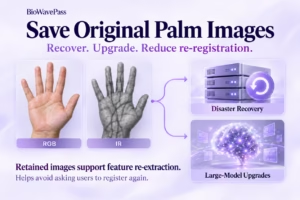
Why Saving Original Palm Images Matters for Biometric Recovery and Future Upgrades By BioWavePass
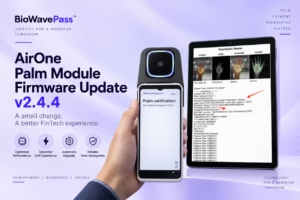
Optimizing Palm Payment Performance: AirOne Palm Module Firmware v2.4.4
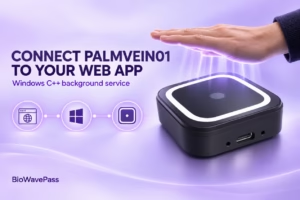
Bringing Palm Vein Scanning into a Web Workflow
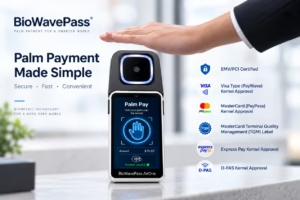
From Palm Payment MVP to Commercial Deployment: Building a Scalable Biometric Payment System
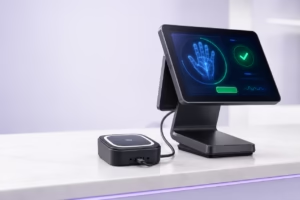
How to Integrate a USB Palm Vein Scanner with a POS Terminal
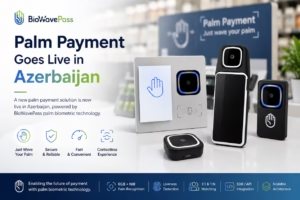
Palm Payment Goes Live in Azerbaijan: From Biometric Technology to Real-World Payment
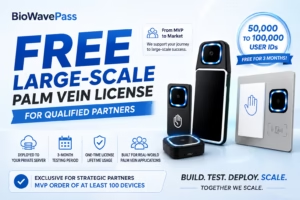
From MVP to Market: Scaling Palm Vein Technology with BioWavePass