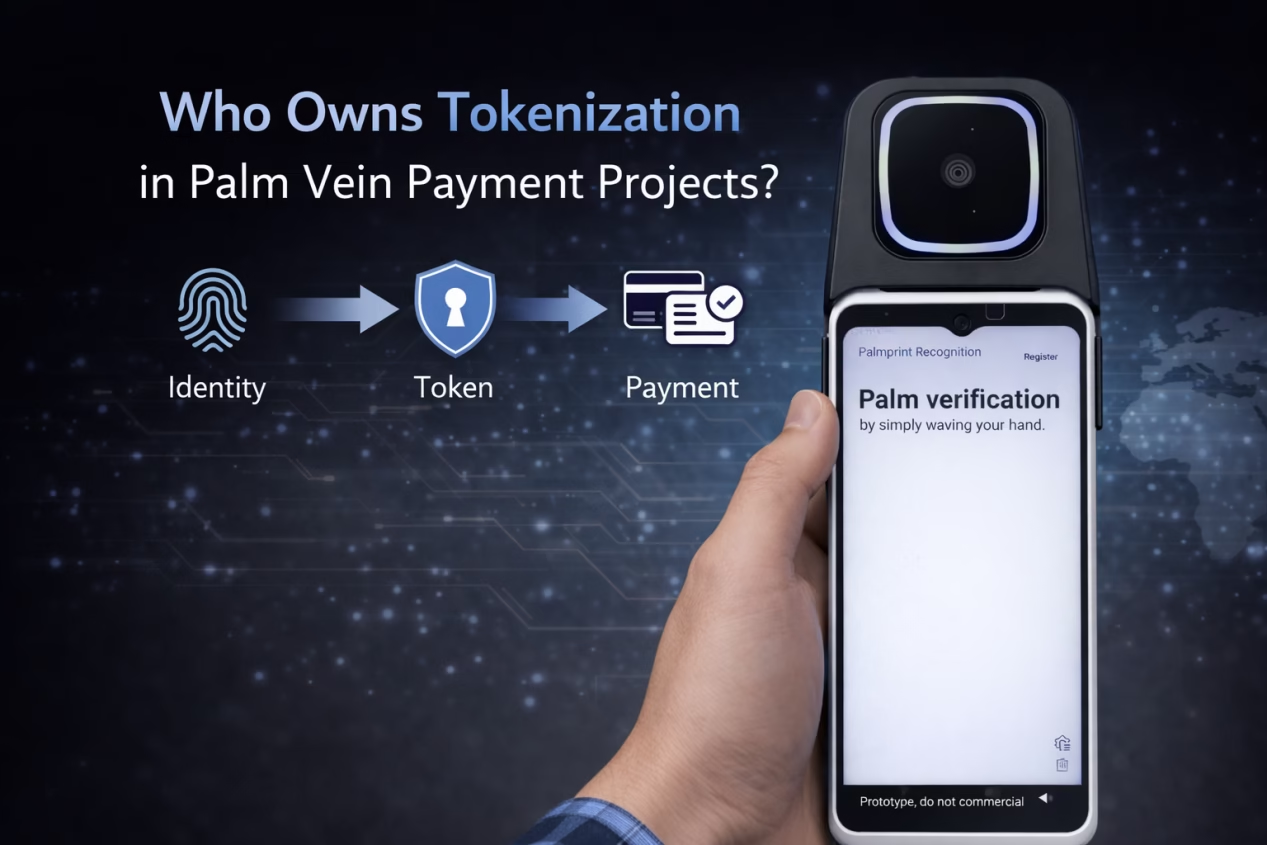
Who Owns Tokenization in Palm Vein Payment Projects?
As palm vein payment moves from concept to real-world deployment, one practical question often arises:
Who is responsible for tokenization in a palm vein payment project?
For fintech companies, banks, and system integrators, this is not just a technical detail. It directly impacts system design, compliance, and long-term scalability.
Why Ownership of Tokenization Matters
Palm vein payment is built on a multi-layer architecture, not a single system.
It includes:
- Identity Layer (Biometric Recognition)
- Authorization Layer (Tokenization)
- Transaction Layer (Payment Processing)
Each layer serves a different purpose, and more importantly, is owned by different parties.
👉 Misunderstanding ownership can lead to:
- Integration failures
- Compliance risks
- Security gaps
What Is Tokenization in This Context?
Tokenization is the process of converting a verified identity into a secure, non-sensitive payment credential (Token).
In palm vein payment:
- A user’s palm is scanned
- Identity is verified
- A Identificación de la palma is generated
- The Palm ID is mapped to a Token
- The Token is used for payment
👉 The Token becomes the only element used in transactions.
The Three Roles in a Palm Vein Payment Project
To clearly define ownership, it is important to separate responsibilities across the architecture.
1. BioWavePass — Identity Layer Provider
BioWavePass delivers the biometric foundation of the system.
This includes:
- RGB + IR palm vein capture
- Liveness detection
- Feature extraction and matching
- High-performance recognition across large databases
All palm vein data and images are encrypted using AES-256 and stored only on the client’s own local or cloud servers. BioWavePass does not manage or store any biometric data.
Output:
👉 Verified identity (Palm ID)
2. Client / Fintech Platform — Tokenization Owner
The responsibility for tokenization lies with:
- Fintech platforms
- Banks
- Wallet providers
This layer handles:
- Mapping Palm ID to Token
- Linking Tokens to payment accounts
- Managing token lifecycle
Key responsibility:
👉 Ensuring that Tokens are secure, compliant, and properly integrated into payment systems
3. Payment Infrastructure — Transaction Owner
The final layer is responsible for executing the transaction.
This includes:
- Payment gateways
- Banking networks
- E-wallet systems
Using the Token:
- Transactions are initiated
- Payments are processed
- Funds are settled
Why BioWavePass Does Not Own Tokenization
This is a deliberate architectural design, not a limitation.
1. Separation of Concerns
Keeping identity and payment logic separate ensures:
- Higher system flexibility
- Easier integration with existing payment ecosystems
2. Compliance and Data Responsibility
Tokenization involves:
- Financial data
- Payment authorization
- Regulatory requirements
These must remain within:
👉 The client’s controlled environment
3. Customization Across Markets
Different regions require different:
- Payment standards
- Regulatory frameworks
- Banking integrations
By keeping tokenization on the client side:
👉 Systems can be adapted to local requirements
How BioWavePass Supports Tokenization Integration
Although BioWavePass does not build tokenization systems, we provide strong support for integration.
What We Provide
- Palm vein biometric identity layer
- Hardware devices and SDK
- Recognition algorithms and matching engine
- Integration capabilities
What We Do Not Provide
- Tokenization systems
- Payment processing
- Financial transaction handling
What We Support
- Token architecture design guidance
- Palm ID to Token mapping strategies
- API and SDK integration support
- End-to-end system design consulting
Common Misconceptions
❌ “Biometric systems should handle payments”
→ Incorrect. They only verify identity
❌ “Tokenization is part of the device”
→ Incorrect. It is part of the payment system
❌ “All layers should be combined”
→ Incorrect. Separation improves security and scalability
Best Practice for Project Design
To build a robust palm vein payment system:
✔ Keep identity, tokenization, and payment layers separate
✔ Define ownership clearly from the start
✔ Use secure APIs to connect each layer
✔ Ensure compliance is handled within the payment system
Conclusión
Tokenization is not owned by the biometric provider. It is the responsibility of the payment platform or financial institution.
BioWavePass focuses on delivering a secure and scalable identity layer, enabling partners to build flexible tokenization and payment systems tailored to their needs.
Clear ownership leads to:
- Better system design
- Stronger security
- Easier scalability
Work with BioWavePass
Clear ownership is the foundation of a successful palm vein payment system.
BioWavePass secures identity — while you retain full control over tokenization and payments.
Learn more from: https://choosepalmveinpay.com/
Comparte este artículo
Sobre el autor

También le puede interesar
Scaling Palm Vein Payment: Single Server or Kubernetes Cluster?
Before You Scale Palm Vein POS: A Terminal Management Checklist
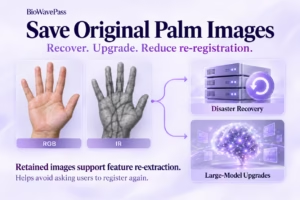
Why Saving Original Palm Images Matters for Biometric Recovery and Future Upgrades By BioWavePass
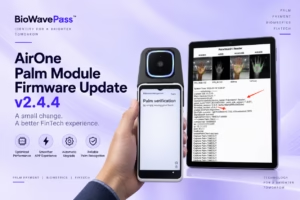
Optimizing Palm Payment Performance: AirOne Palm Module Firmware v2.4.4
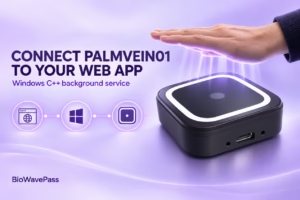
Bringing Palm Vein Scanning into a Web Workflow
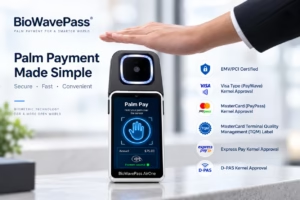
From Palm Payment MVP to Commercial Deployment: Building a Scalable Biometric Payment System
How to Integrate a USB Palm Vein Scanner with a POS Terminal
Palm Payment Goes Live in Azerbaijan: From Biometric Technology to Real-World Payment
From MVP to Market: Scaling Palm Vein Technology with BioWavePass