Sometimes, big ideas start from small frustrations.
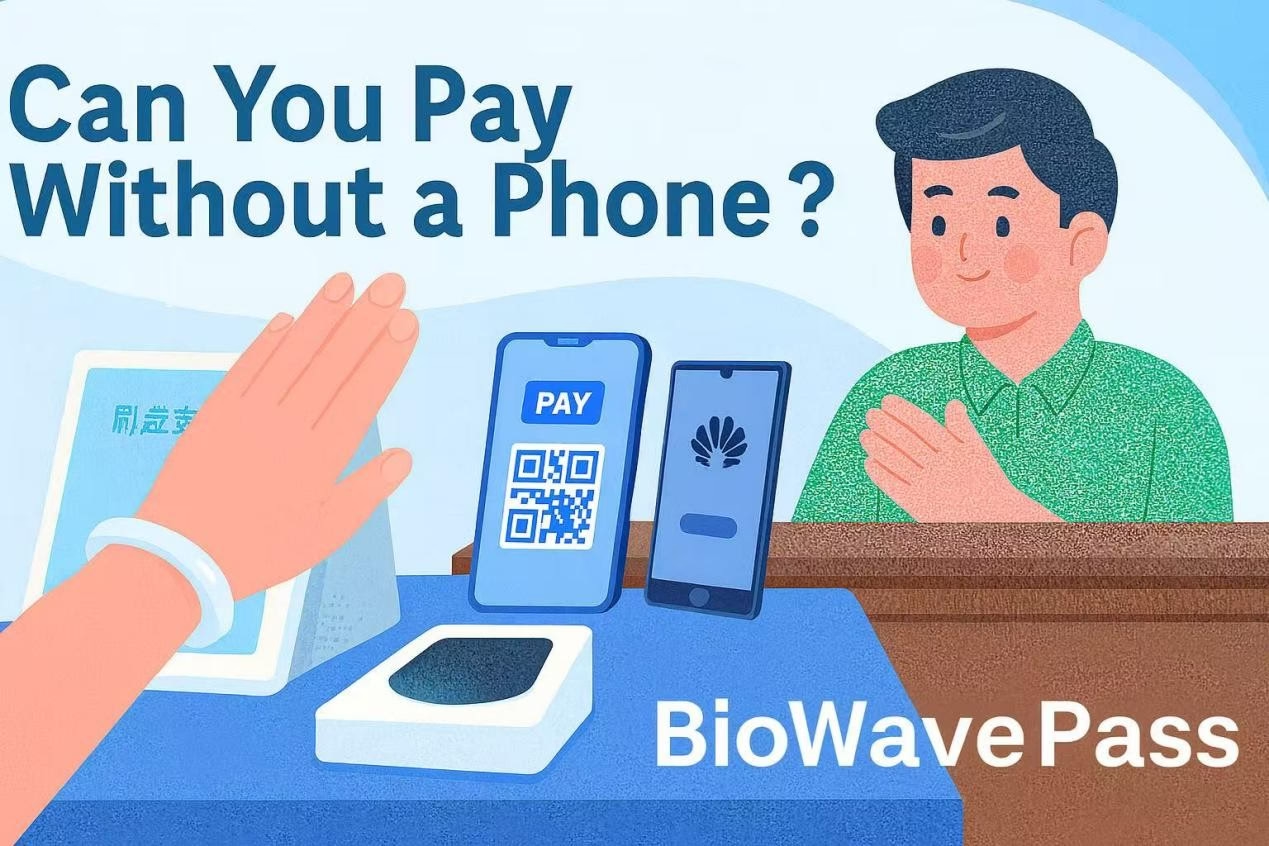
A few years ago, I took an important client to dinner.
In China, people love to rush to pay the bill — it’s almost a tradition.
That night, it was my turn to pay. I confidently pulled out my iPhone to scan the QR code…
But the connection was terrible.
Before I could even connect to the Wi-Fi, my client — using a Huawei phone — had already paid.
He smiled and said:
“Maybe you should get a Huawei. iPhones aren’t fast enough.”
We both laughed — but that moment made me realize something:
What if payments didn’t rely on phones, signals, or apps at all?
✋ The Start of Palm Pay
That simple thought became the starting point for Palm Pay — a payment system powered by Palm Vein Technology.
Au BioWavePass, we believe the future of payments is not about devices — it’s about identity.
With Palm Pay, your palm becomes your secure ID.
No phone. No card. No Wi-Fi. Just your hand.
Place your palm over the Scanner de veine de la main, and the payment is complete — instantly, securely, and contactlessly.
⚙️ How BioWavePass Technology Works
Our Scanner de veine de la main captures both RGB and IR imaging to recognize palm print and vein features within milliseconds.
✅ Dual-mode recognition (RGB + IR) for high precision
✅ 0.35-second matching speed for real-time transactions
✅ AES-256 and SSL encryption for full data security
✅ SDKs and APIs for integration with fintech, eKYC, and smart retail systems
✅ Reliable hardware designed for commercial-scale deployment
BioWavePass delivers more than devices — we provide a complete Palm Vein Technology Solution,
from SDK optimization and algorithm updates to full commercial rollout support.
🌍 Why Palm Pay Is Becoming a Global Trend
Palm Pay represents the next step in cashless, contactless payment evolution.
Phones can lose signal. Cards can be forgotten.
But your palm is always with you.
It’s faster than a QR code, safer than a fingerprint, and cleaner than handling cash.
That’s why governments, banks, and fintech companies are investing in Palm Vein Payment —
a system built for convenience, hygiene, and security.
The future of payment isn’t in your pocket anymore —
it’s in your hand. ✋
Learn more: Android-Palm-Vein-Terminal
Partager cet article
A propos de l'auteur

Vous pourriez aussi aimer
Bringing Palm Vein Scanning into a Web Workflow
From Palm Payment MVP to Commercial Deployment: Building a Scalable Biometric Payment System
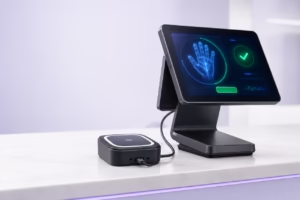
How to Integrate a USB Palm Vein Scanner with a POS Terminal
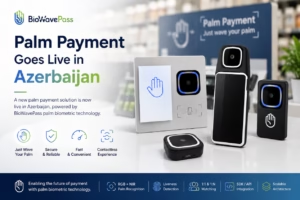
Palm Payment Goes Live in Azerbaijan: From Biometric Technology to Real-World Payment
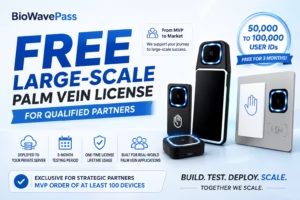
From MVP to Market: Scaling Palm Vein Technology with BioWavePass
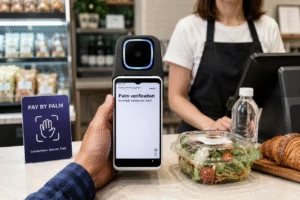
Palm Vein Payment: How Biometric Payments Work Without Cards or Phones
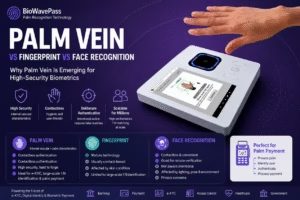
Palm Vein vs Fingerprint vs Face Recognition: Why Palm Vein Is Emerging for High-Security Biometrics
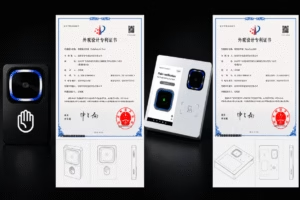
BioWavePass Palm Vein Scanner Products Receive Design Patent Certification
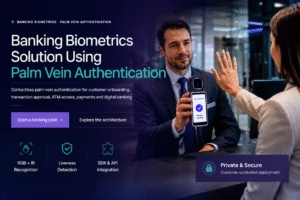
Palm Vein Authentication: The Future of Secure Digital Identity and Payments