Sometimes, big ideas start from small frustrations.
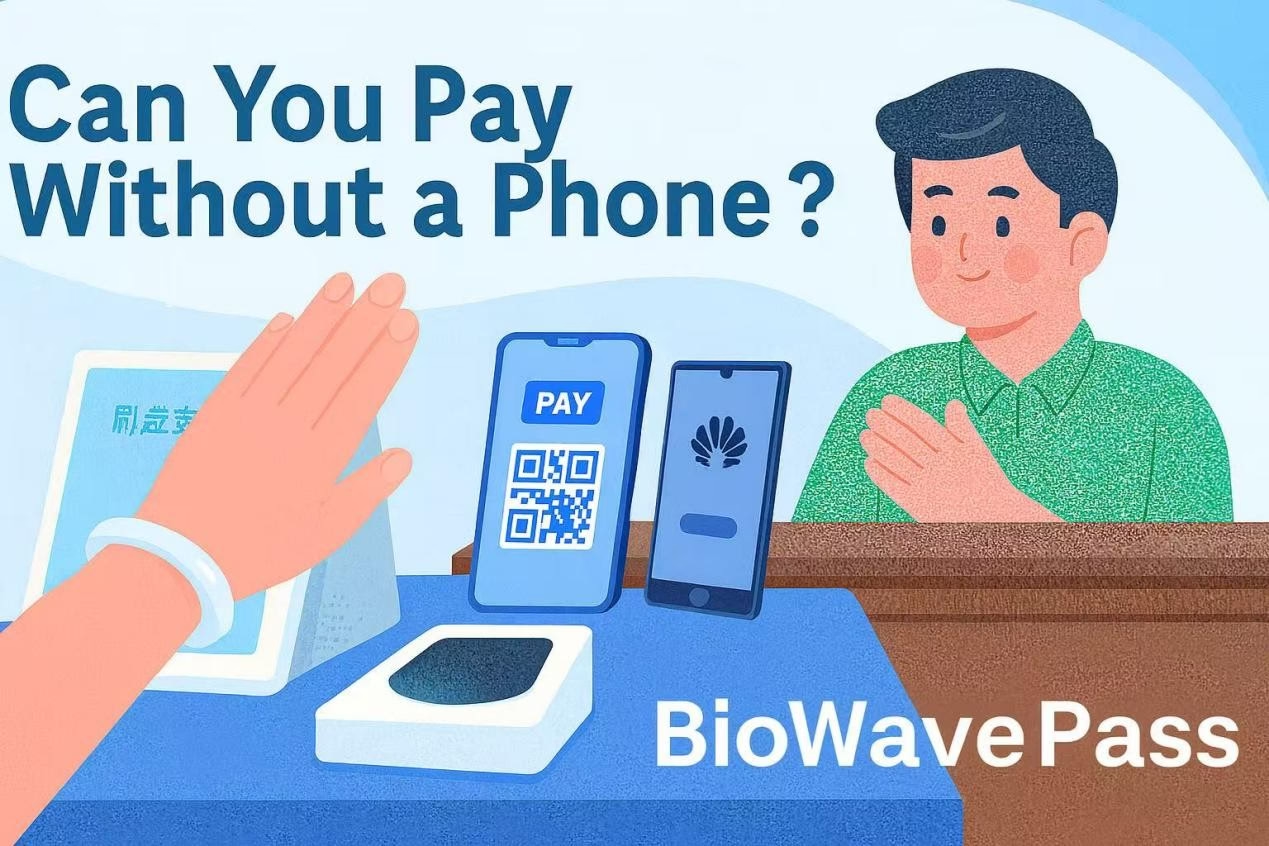
A few years ago, I took an important client to dinner.
In China, people love to rush to pay the bill — it’s almost a tradition.
That night, it was my turn to pay. I confidently pulled out my iPhone to scan the QR code…
But the connection was terrible.
Before I could even connect to the Wi-Fi, my client — using a Huawei phone — had already paid.
He smiled and said:
“Maybe you should get a Huawei. iPhones aren’t fast enough.”
We both laughed — but that moment made me realize something:
What if payments didn’t rely on phones, signals, or apps at all?
✋ The Start of Palm Pay
That simple thought became the starting point for Palm Pay — a payment system powered by Palm Vein Technology.
At BioWavePass, we believe the future of payments is not about devices — it’s about identity.
With Palm Pay, your palm becomes your secure ID.
No phone. No card. No Wi-Fi. Just your hand.
Place your palm over the Palm Vein Scanner, and the payment is complete — instantly, securely, and contactlessly.
⚙️ How BioWavePass Technology Works
Our Palm Vein Scanner captures both RGB and IR imaging to recognize palm print and vein features within milliseconds.
✅ Dual-mode recognition (RGB + IR) for high precision
✅ 0.35-second matching speed for real-time transactions
✅ AES-256 and SSL encryption for full data security
✅ SDKs and APIs for integration with fintech, eKYC, and smart retail systems
✅ Reliable hardware designed for commercial-scale deployment
BioWavePass delivers more than devices — we provide a complete Palm Vein Technology Solution,
from SDK optimization and algorithm updates to full commercial rollout support.
🌍 Why Palm Pay Is Becoming a Global Trend
Palm Pay represents the next step in cashless, contactless payment evolution.
Phones can lose signal. Cards can be forgotten.
But your palm is always with you.
It’s faster than a QR code, safer than a fingerprint, and cleaner than handling cash.
That’s why governments, banks, and fintech companies are investing in Palm Vein Payment —
a system built for convenience, hygiene, and security.
The future of payment isn’t in your pocket anymore —
it’s in your hand. ✋
Learn more: Android-Palm-Vein-Terminal
Share this article
About the Author

You might also like
Can a Palm Vein SDK Capture Data Without an Algorithm Server?
Palm Vein Image Encryption: Why AES-256-GCM Alone Does Not Guarantee Compatibility
Large-Scale Palm Vein Recognition: How to Test the SDK and Plan for Growth

Palm Vein Payment SDK: Direct Algorithm Server Integration or Your Own Backend?
Palm Vein Deployment Support: Who Can Access Your Servers?
Scaling Palm Vein Payment: Single Server or Kubernetes Cluster?
Before You Scale Palm Vein POS: A Terminal Management Checklist
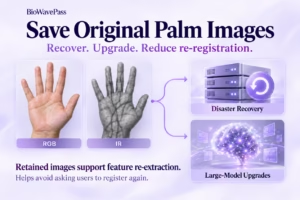
Why Saving Original Palm Images Matters for Biometric Recovery and Future Upgrades By BioWavePass
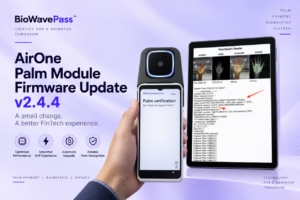
Optimizing Palm Payment Performance: AirOne Palm Module Firmware v2.4.4