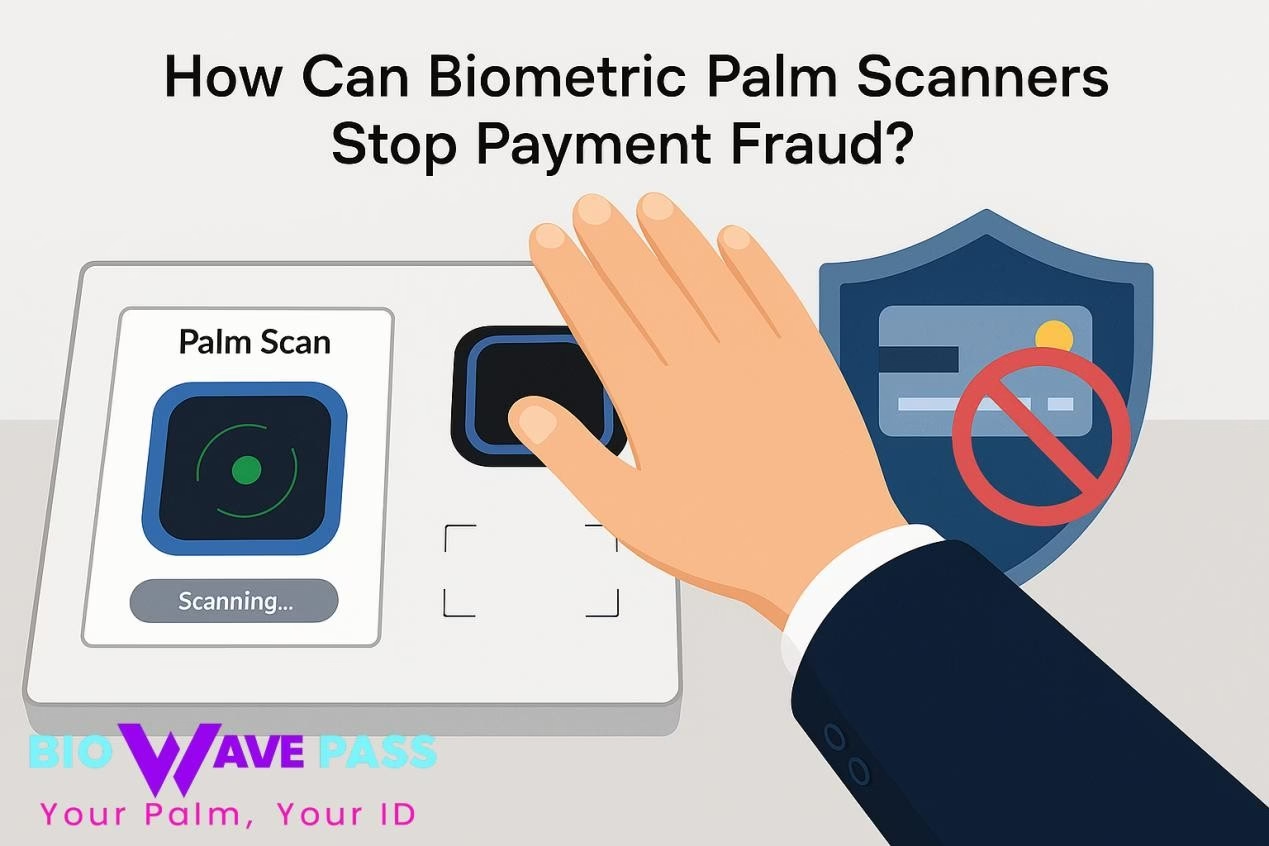
How Can Biometric Palm Vein Scanners Stop Payment Fraud?
Payment fraud continues to rise across digital and contactless payment systems.
As more businesses adopt biometric authentication, one question stands out:
👉 Can Biometric Palm Scanners really stop payment fraud?
At BioWavePass, our Palm Vein Technology and Palm Payment Solutions redefine payment security — combining internal biometrics, encrypted architecture, and real-time verification to create a fraud-proof payment ecosystem.
🔍 Why Traditional Payment Methods Fail to Prevent Fraud
Most digital transactions today rely on external identifiers — cards, phones, or facial scans — all of which can be stolen, copied, or spoofed.
Common vulnerabilities include:
- 💳 Card and QR code cloning from leaked data or screenshots
- 🧑💻 Facial spoofing through deepfake or printed images
- 🖐️ Fingerprint theft from shared surfaces
- 🔓 Account takeovers through stolen credentials
The result: rising fraud losses and declining trust in digital payments.
That’s why more fintech and eKYC systems are turning to Palm Vein Recognition Technology,
the only biometric that verifies identity under the skin.
✋ The Palm Vein Advantage: Hidden Security, Visible Trust
Palm Vein Technology identifies users by the unique vein patterns inside their hand, not visible to the naked eye.
Using RGB + IR dual-spectrum imaging, BioWavePass Palm Vein Scanners capture both:
- 🩸 Palm Vein Features — subcutaneous vascular structures
- 🖐️ Palm Print Features — surface-level ridge details
These dual-layer data points are converted into encrypted mathematical templates,
which cannot be reverse-engineered — ensuring maximum Palm Pay security.
⚙️ How Palm Vein Scanners Prevent Payment Fraud
1️⃣ Internal Biometrics: Hidden & Impossible to Copy
Unlike fingerprints or facial data, palm veins are internal and cannot be photographed or replicated.
2️⃣ RGB + IR Dual Verification = Real Liveness Detection
The BioWavePass Palm Vein Scanner uses two simultaneous image channels.
If a fraudster uses a fake palm, replay photo, or silicone mold — the system rejects it instantly.
3️⃣ End-to-End Encryption & Decentralized Matching
All palm data is encrypted (AES-256-CBC) and processed securely — never stored as raw images.
4️⃣ Consistent FAR/FRR Accuracy Across Upgrades
Pre-storing RGB + IR images during registration keeps FAR (False Acceptance Rate) and FRR (False Rejection Rate) stable,
even as systems migrate from small to large algorithm models.
5️⃣ No Contact, No Contamination, No Spoofing
Palm Payment is completely contactless — eliminating hygiene risks and physical tampering.
🧠 Inside BioWavePass Palm Payment Technology
Every BioWavePass Palm Vein Scanner integrates the following core technologies:
- ⚙️ RGB + IR Dual-Sensor Imaging
- ⚡ 99%+ Matching Accuracy within 0.35s
- 🔒 AES-256 Encryption with GDPR Compliance
- 💻 Cross-Platform SDKs — Android, Windows, Linux, Flutter
- 🧩 Scalable Algorithm Models — small or large, based on user volume
- 🌐 Local and Cloud Verification Options
With these features, BioWavePass Palm Payment Technology provides developers, integrators, and fintech companies a reliable framework for anti-fraud contactless payments.
💳 Real-World Palm Payment Applications
🏬 Retail & Smart POS Systems – Authenticate the real person, not just the card.
🏦 Fintech Platforms – Enable secure, seamless Palm Pay transactions.
🏛️ Government & Subsidy Programs – Prevent duplicate registration and benefit abuse.
🏥 Healthcare & Insurance – Verify patient identity before billing.
🎓 Education & Workplace Access – Combine identity with cashless systems.
Palm Vein Technology by BioWavePass bridges convenience and security — preventing fraud without disrupting user experience.
🌍 Why the Future of Payment Is Palm-Based
Fraud prevention can no longer rely on passwords, cards, or even faces.
True identity comes from something internal, unique, and impossible to forge — your palm veins.
With BioWavePass Palm Payment Technology, every transaction ties to a living identity.
No PINs. No cards. No phones.
Just your palm — your identity, your key, your payment. ✋
Learn More About BioWavePass’s Palm Vein Payment Solutions
Share this article
About the Author

You might also like
Bringing Palm Vein Scanning into a Web Workflow
From Palm Payment MVP to Commercial Deployment: Building a Scalable Biometric Payment System
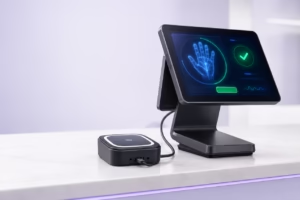
How to Integrate a USB Palm Vein Scanner with a POS Terminal
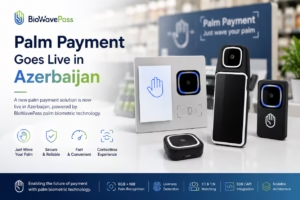
Palm Payment Goes Live in Azerbaijan: From Biometric Technology to Real-World Payment
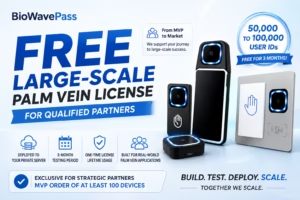
From MVP to Market: Scaling Palm Vein Technology with BioWavePass
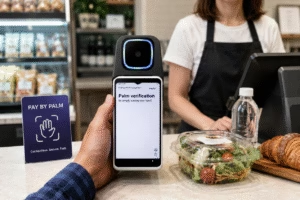
Palm Vein Payment: How Biometric Payments Work Without Cards or Phones
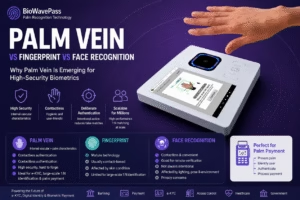
Palm Vein vs Fingerprint vs Face Recognition: Why Palm Vein Is Emerging for High-Security Biometrics
BioWavePass Palm Vein Scanner Products Receive Design Patent Certification
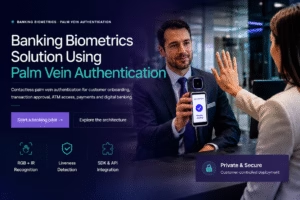
Palm Vein Authentication: The Future of Secure Digital Identity and Payments