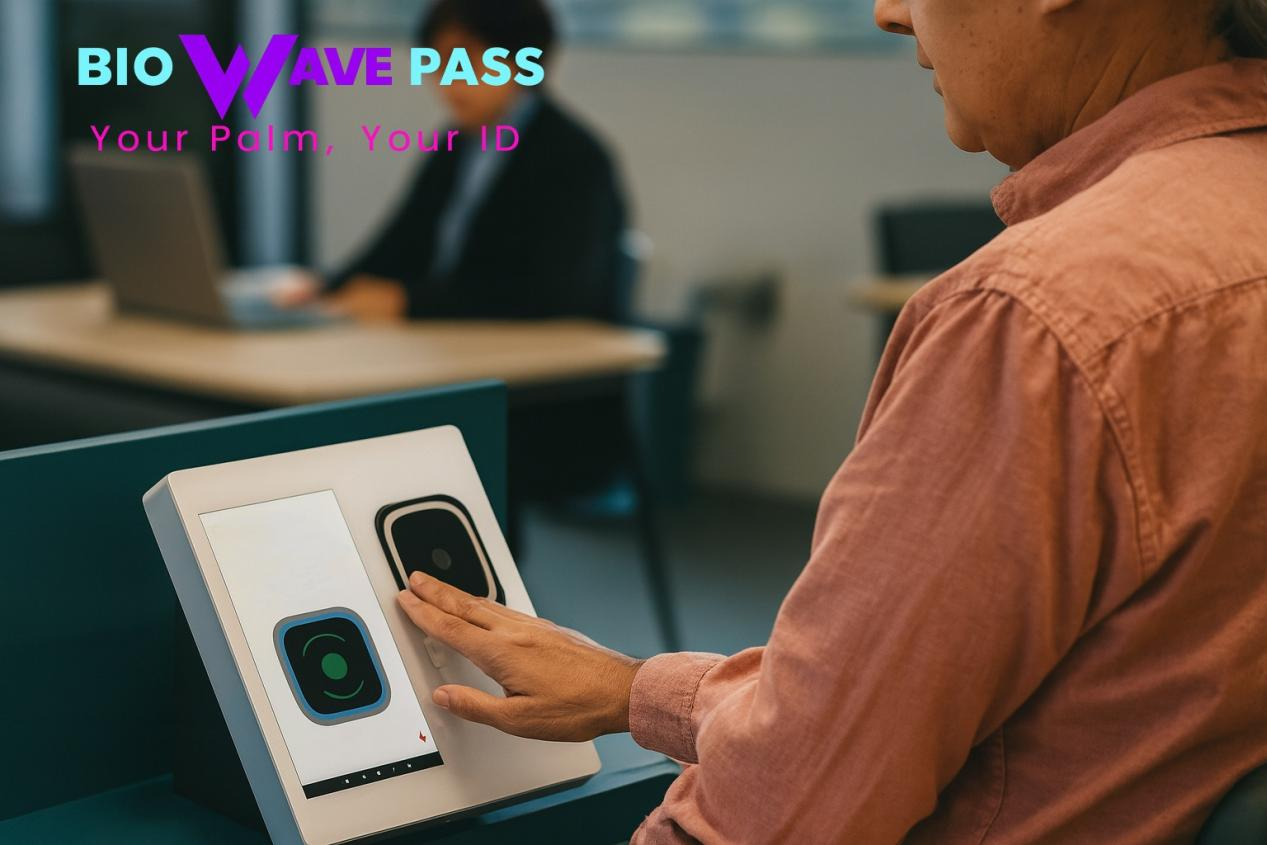
How Can Biometric Palm Scanners Ensure Fair Government Subsidy Distribution?
Government subsidy programs are essential for social welfare, but they face challenges like identity fraud, outdated ID cards, and citizens without smartphones. Ensuring subsidies reach the right people requires a secure yet inclusive solution.
The WavePass500 Biometric POS combines palm vein authentication with dual card compatibility, making it ideal for government eKYC projects.
Challenges in Subsidy Programs
- Fraud and Duplication: Fake beneficiaries claim subsidies illegally.
- Legacy ID Cards: Many citizens still hold ISO7816 contact-only cards.
- Digital Divide: Not everyone owns smartphones or e-wallets.
The WavePass500 Solution
- Palm Vein Authentication: Almost impossible to forge, preventing fake registrations.
- Dual Card Support: Reads both contact IC cards (ISO7816) and contactless NFC cards (ISO14443A).
- No Smartphone Needed: Citizens can claim subsidies with just their palm or ID card.
Conclusion
With WavePass500 Biometric Palm Scanner, governments can secure subsidy programs, include citizens with legacy IDs, and ensure fair and transparent distribution.
One device, multiple solutions — subsidy programs become faster, safer, and more inclusive.
Share this article
About the Author

You might also like
Bringing Palm Vein Scanning into a Web Workflow
Web applications are effective at managing users and business workflows. Connecting one to a USB palm vein scanner requires an additional software layer, because BioWavePass does not currently provide a
From Palm Payment MVP to Commercial Deployment: Building a Scalable Biometric Payment System
Launching a palm payment MVP is one thing. Building a biometric payment system capable of supporting 100,000, 1 million or even more users is a very different challenge. For FinTech
How to Integrate a USB Palm Vein Scanner with a POS Terminal
Palm payment can make checkout faster and more convenient by allowing customers to confirm their identity with a simple, contactless palm gesture. However, integrating a standalone USB Palm Vein Scanner
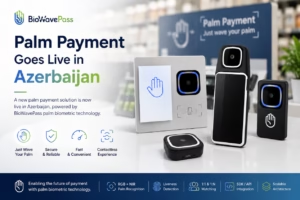
Palm Payment Goes Live in Azerbaijan: From Biometric Technology to Real-World Payment
Palm payment is moving from concept to commercial reality. A new palm payment solution has now officially launched in Azerbaijan, allowing registered consumers to authenticate payments simply by presenting their
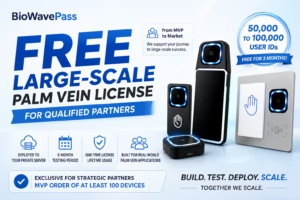
From MVP to Market: Scaling Palm Vein Technology with BioWavePass
Palm vein technology is moving rapidly from proof-of-concept projects towards real-world commercial applications. For technology partners, successfully demonstrating palm vein recognition with a small number of users is only the
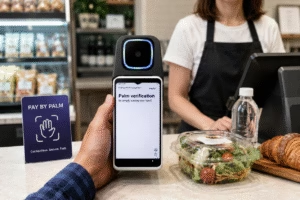
Palm Vein Payment: How Biometric Payments Work Without Cards or Phones
Payments have evolved from cash and magnetic stripe cards to contactless cards, smartphones, QR codes and digital wallets. The next step could be even simpler: Your palm becomes your authentication
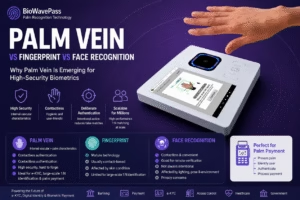
Palm Vein vs Fingerprint vs Face Recognition: Why Palm Vein Is Emerging for High-Security Biometrics
Biometric authentication is becoming an essential part of e-KYC, digital identity, banking, access control and biometric payment systems. Fingerprint and facial recognition are already widely used, but palm vein recognition
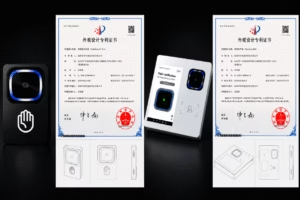
BioWavePass Palm Vein Scanner Products Receive Design Patent Certification
BioWavePass is pleased to announce that two of our key biometric hardware products, the PalmVein01 Pro Palm Vein Scanner and WavePass500 Palm Vein Recognition Device, have officially received their Design
Palm Vein Authentication: The Future of Secure Digital Identity and Payments
Introduction The way people authenticate their identity is changing. For decades, digital services have relied on passwords, cards, and mobile devices. However, these traditional methods are increasingly challenged by fraud,
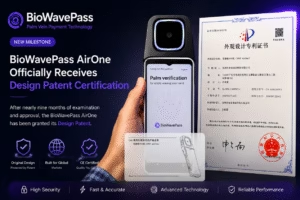
BioWavePass AirOne Portable Palm Vein Payment POS Terminal Receives Design Patent
Innovation is often measured by what customers can see. Originality is measured by what can be protected. We are proud to announce that the BioWavePass AirOne Portable Palm Vein Payment